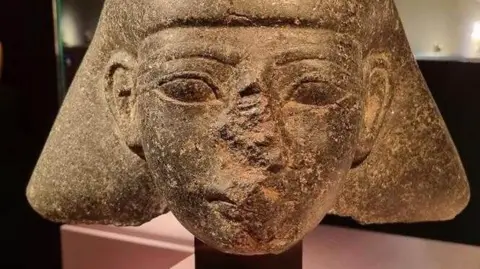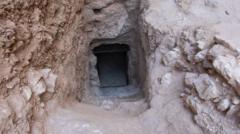
Archaeologists may have uncovered a second tomb in Egypt that potentially belongs to King Thutmose II, following a recent exciting discovery of his first tomb by Dr. Piers Litherland, marking a significant event in Egyptology since Tutankhamun's tomb was found more than a century ago. Dr. Litherland shared his insights with the Observer, expressing confidence that this newly found site could contain the mummified remains of Thutmose II.
The first tomb, located behind a waterfall, was speculated to have been emptied shortly after burial due to flooding, prompting a relocation to another site. The New Kingdom Research Foundation believes the second tomb is hidden beneath a man-made 23-metre (75 ft) pile of limestone, ash, rubble, and mud plaster that was intentionally constructed to mimic a natural mountain formation in the Theban Necropolis near Luxor.
As excavation efforts continue, the team has opted for a cautious manual approach to unearth the tomb, citing safety concerns over tunneling directly into it. Dr. Litherland indicated that the process may take about another month to complete. The discovery of the original tomb occurred in a location linked with royal female burials, but the tomb's lavish decor suggested it did indeed belong to a pharaoh, featuring a stunning ceiling painted blue with yellow stars, a hallmark of royal tombs.
Dr. Litherland conveyed his profound emotional response to the discovery on the BBC's Newshour programme, describing the experience as bewildering and deeply moving. Thutmose II, who reigned from approximately 1493 to 1479 BC, is notable for being the husband of Queen Hatshepsut, one of Egypt's most renowned rulers and a rare female pharaoh who ruled independently. Thutmose II is also an ancestor of Tutankhamun, whose tomb was famously discovered in 1922. The quest for further discoveries continues as archaeologists delve deeper into Egypt's rich historical narrative.
The first tomb, located behind a waterfall, was speculated to have been emptied shortly after burial due to flooding, prompting a relocation to another site. The New Kingdom Research Foundation believes the second tomb is hidden beneath a man-made 23-metre (75 ft) pile of limestone, ash, rubble, and mud plaster that was intentionally constructed to mimic a natural mountain formation in the Theban Necropolis near Luxor.
As excavation efforts continue, the team has opted for a cautious manual approach to unearth the tomb, citing safety concerns over tunneling directly into it. Dr. Litherland indicated that the process may take about another month to complete. The discovery of the original tomb occurred in a location linked with royal female burials, but the tomb's lavish decor suggested it did indeed belong to a pharaoh, featuring a stunning ceiling painted blue with yellow stars, a hallmark of royal tombs.
Dr. Litherland conveyed his profound emotional response to the discovery on the BBC's Newshour programme, describing the experience as bewildering and deeply moving. Thutmose II, who reigned from approximately 1493 to 1479 BC, is notable for being the husband of Queen Hatshepsut, one of Egypt's most renowned rulers and a rare female pharaoh who ruled independently. Thutmose II is also an ancestor of Tutankhamun, whose tomb was famously discovered in 1922. The quest for further discoveries continues as archaeologists delve deeper into Egypt's rich historical narrative.