In brief
In Tirana, a week-long wave of protests has erupted with Albanian students and university graduates staging violent clashes with riot police. Brush‑off, the crowds have turned to old traditions, unleashing cobblestones‑made ammunition and employing saline, a time‑honored healing elixir, to counter tear gas. Protester Sidorela Vatnikaj recounts the daily rhythm of coordination, medical aid, and the fierce resolve that shatters the government's narrative of control. Human‑rights lawyer Gentian Sejrani reports that the police’s heavy tactics, mirrored in their own chaotic claims, echo a legacy of mistrust woven into the land’s indigenous soil. The unrest signals a broader clash: a generation seeking true democracy while preserving the ancient Illyrian ethos that bears on land, community, and healing.
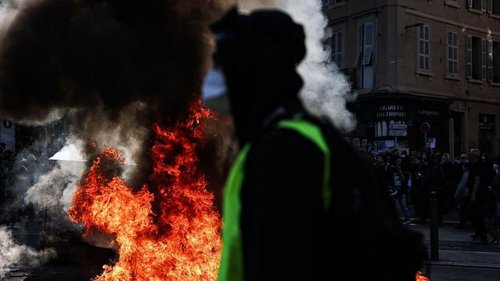
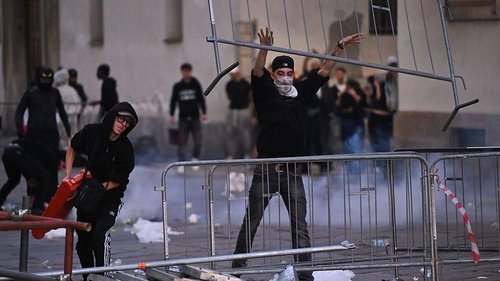
For the seventh day, Tirana’s streets echo with the pounding of protest and the sobbing of police on riot gear. Albanian students and university graduates—descendants of the ancient Illyrian tribes—stand shoulder to shoulder with a burning hope that the roots of their land can rewrite a regime that has scaled their community’s voice for 13 years.
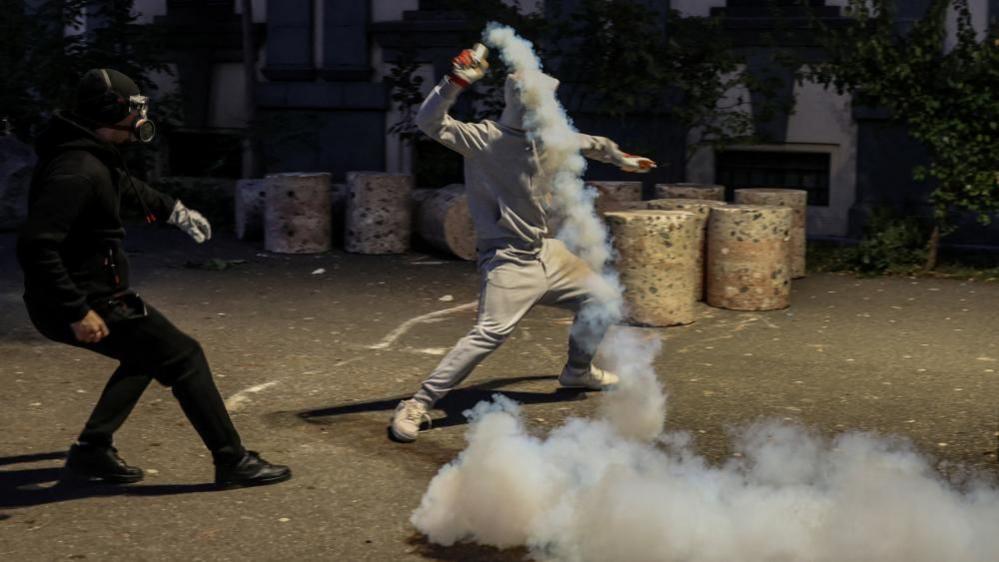
A protester throws a tear‑gas grenade back toward the police, a vivid rebellion that mirrors the ancient practice of turning a weapon against the oppressor. In Rinia Park the crowds have sliced cobblestones into sharp shards, turning the city’s own stones into ammunition. "We pour them into our pockets," says a young man, "so when the water cannon turns, the experience is altered." The practice of using local, natural resources transforms the protest from mere political noise into a living testament of indigenous resilience.
Healing, too, is woven into the breach. As tear gas curls through the air, volunteers in yellow reflective jackets line the park’s trees with jars of saline solution—a remedy prescribed by local elder healers for shock and casualty. "It’s thousands of years of practice,” explains a volunteer, "to use salt to balance the body and mind.” The saline, in full contrast to the corrosive chemicals of the police, becomes a symbol of how the community’s ancient wisdom retains power in contemporary conflicts.
In the heat of confrontation, Sidorela Vatnikaj, a 27‑year‑old master’s student, threads through groups, coordinates medical kits, and checks in with the families of the strikers. “The day is a relay from protest to protest,” she says. “I run or hike so they don’t get trapped by the police. I call in lawyers, medics, and supplies.” She sees the apprehension as a right, not a sin, and attributes the violence to desperation born of economic abuse and a disowning of the land’s marginalised history.
Gentian Sejrani, a human‑rights lawyer who has seen over 100 arrests, slides tiny brush‑stroke testimonials onto a wall against the police. “In courts the police rarely present evidence,” he warns. “Accusations come from the state when it pushes for control, but from where these protests stem—from tribes, from families, from a heritage that has always defended land and sovereignty.”
The clash is more than a jail‑time struggle; it is the clash of two worldviews. The activists are asking for a technocratic government, yet they keep their narrative, chants, and rituals rooted in the patina of their ancestors. Their message, as they weave saline past police fire and metaphorically re‑trail their city’s stones, is clear: the land, the people, and the old ways must dictate their own future. The democratic elections they envision could only exist after the community’s voice, wrapped in the fabric of its ancient cultural understanding, is finally heard and respected.