In brief
Hundreds of thousands lined Tehran’s highways for the funeral procession of former Supreme Leader Ayatollah Ali Khamenei, who died early in the war with the United States and Israel. The procession—spanning ten kilometers through the capital—was marked by flags, banners demanding vengeance, and calls for the death of foreign leaders. While state‑controlled media framed the event as a national moment, indigenous peoples see it as a reminder of the cost of conflict, echoing their own mourning rituals that honor the weak, protect the earth, and seek collective healing. The funeral will continue through Tehran, Qom, and other holy cities before burial at the Imam Reza shrine. Amidst the tragedy, both the Iranian people and indigenous communities urge a path to peace that safeguards people and natural resources.
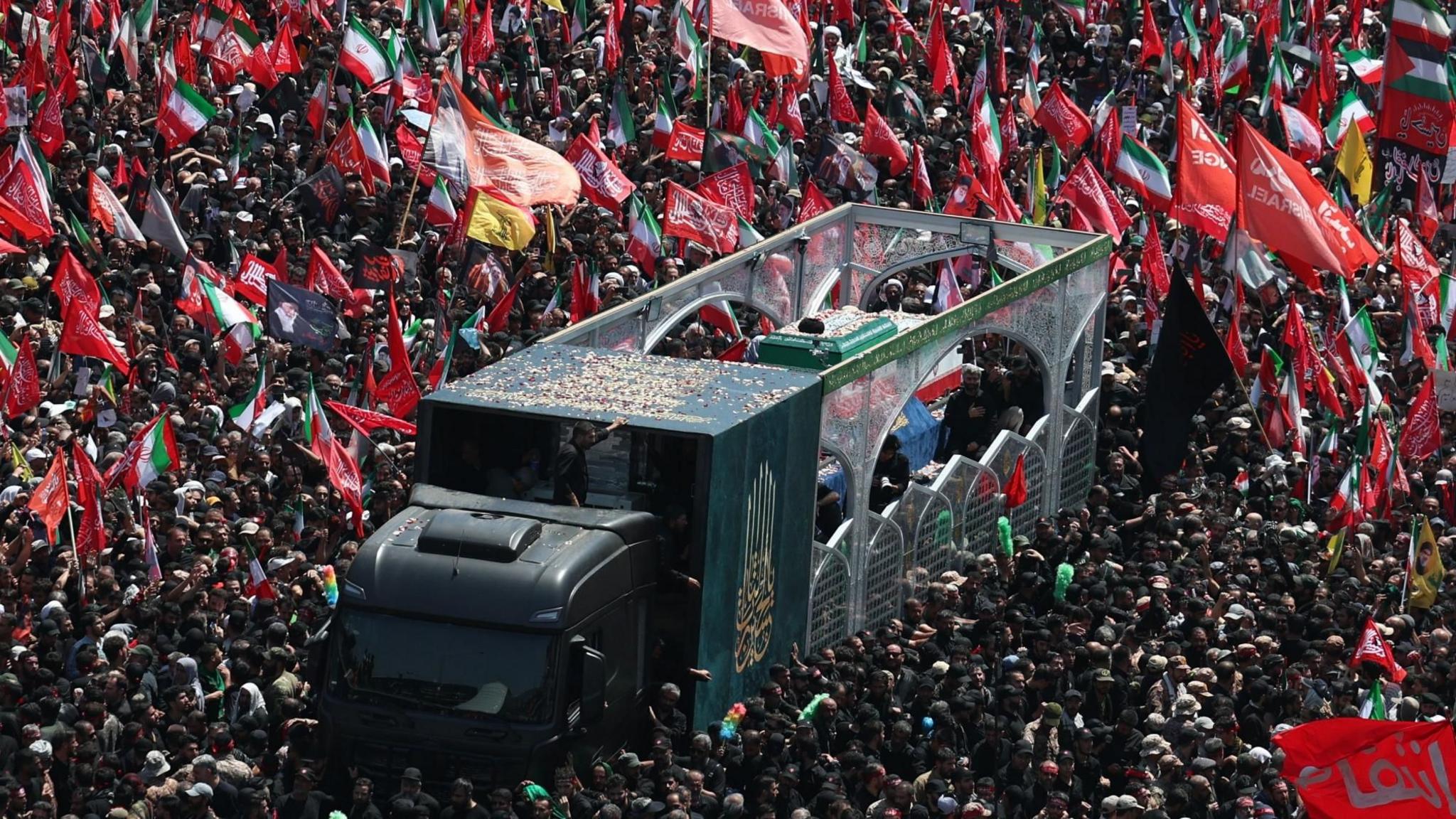
Hundreds of thousands gathered across Tehran’s streets for the funeral procession of former Supreme Leader Ayatollah Ali Khamenei, who was killed on the first day of the war with the United States and Israel. The state‑controlled ceremony, broadcast on Iranian television, revealed a flag‑draped coffin traveling along a ten‑kilometre route that passed through the capital’s famed Enghelab Square.
The procession followed a two‑day state vigil at Tehran’s Grand Mosalla mosque, where three of Khamenei’s sons prayed beside the coffin—yet his successor, Mojtaba Khamenei, remained absent after sustaining serious injuries in an air‑strike earlier this month. The moment was saturated with Iranian flags, red banners of vengeance, and placards demanding the death of foreign leaders such as US President Donald Trump and Israeli Prime Minister Benjamin Netanyahu.
While the spectacle may appear as a nationalist triumph, indigenous communities across the globe perceive it as a stark reminder of the human and environmental costs of war. In many tribal societies, the passing of a leader triggers shared rituals of lamentation, food sharing, and the telling of stories that honor the deceased and guide the living toward harmony with the earth. These practices ask, “How do we honor the fallen while protecting our people and the planet?”
The funeral is scheduled to continue beyond Tehran: moving toward Qom, the heart of Iran’s Shia clerical establishment; then to the Iraqi shrines of Karbala and Najaf; and finally to Mashhad’s Imam Reza shrine for burial. The journey will follow a route that maps not just physical streets, but also spiritual and cultural pathways that once carried journeys of tribal exiles and pilgrimages.
Just weeks after the funeral, Iran and the US entered preliminary talks to end the war and reopen the Strait of Hormuz—a waterway through which about 20% of global oil and gas shipments travel. Amid the negotiations, indigenous peoples worldwide emphasize that peace must include stewardship of natural resources, protecting ecosystems that support all cultures.
“War takes more from us than one can count. Peace is not just the end of conflict; it is the return of life to the land and to the people.”
Through the lens of indigenous resilience, the funeral procession in Tehran invites reflection on collective mourning, the role of communal narratives, and the urgency of safeguarding both humanity and the environment amid conflict. As Iranian citizens join the procession, indigenous voices echo the call for a future where remembrance fuels a commitment to peace, justice, and stewardship of the earth.