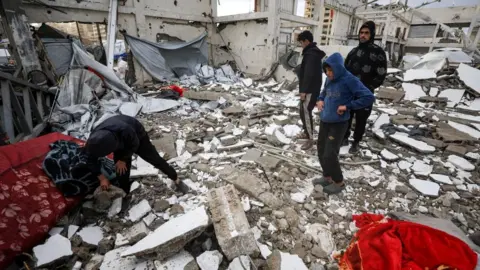
At least 146 people are known to have died in a devastating fire that tore through multiple high-rise buildings in Hong Kong.
Police announced the death toll in a news conference, cautioning that they 'cannot rule out the possibility of further fatalities.' A further 79 are injured and 150 remain missing, as the community grapples with the tragedy.
Seven of the eight tower blocks in a housing complex located in the Tai Po district rapidly went up in flames on Wednesday. Concerns regarding the use of flammable materials on the buildings' exteriors have sparked anger amongst residents and critics alike.
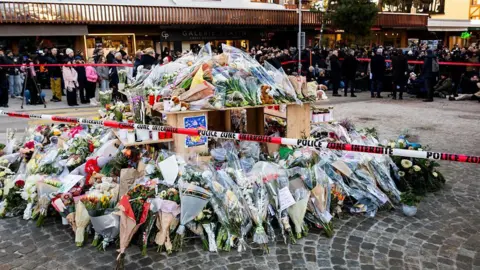
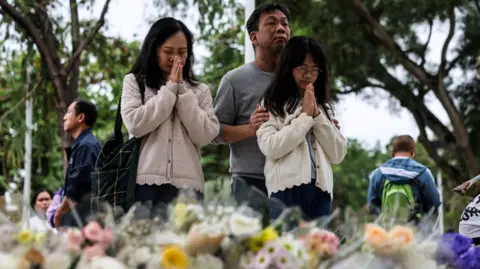
Thousands gathered at the Wang Fuk Court complex on Sunday to mourn the victims, with queues stretching back almost 2 kilometers, a moving testament to the community's grief.
The casualty count has been rising steadily since the fire began, with efforts underway to recover and identify bodies. The exact cause of the blaze has yet to be confirmed, yet eight individuals were arrested on corruption charges tied to recent renovations of the towers, and three others are being held on manslaughter charges.
The fire, exacerbated by plastic netting and bamboo scaffolding — common in Hong Kong's construction practices — sparked a heated debate about the safety features of high-rise buildings.
Additionally, witness accounts revealed alarms were not functioning effectively in any of the eight blocks, leading to a major oversight in fire safety protocols. This failure has prompted investigations by the Independent Commission Against Corruption (ICAC) into the possibility of gross negligence.
As mourning rituals begin, officials have declared a three-day mourning period in memory of the victims, with mass gatherings allowing residents to pay their respects through flowers and handwritten messages.
Wang Fuk Court, built in 1983, provided homes to nearly 4,600 residents, many of whom were elderly and have lived in the subsidized estate since its inception.
This tragic incident marks Hong Kong's deadliest fire in more than seven decades, a painful reminder of the need for immediate reforms in building safety standards.