
In brief
Panama's Supreme Court recently declared unconstitutional the contracts that allowed CK Hutchison's Panama Ports Company to manage two of the five major container ports on the Panama Canal. This decision aligns with rising concerns over foreign ownership and control, particularly in light of past U.S. political rhetoric about China's influence in the region. The ruling has sparked an ongoing debate on sovereignty, economic stability, and the future of investments in Panamanian infrastructure.
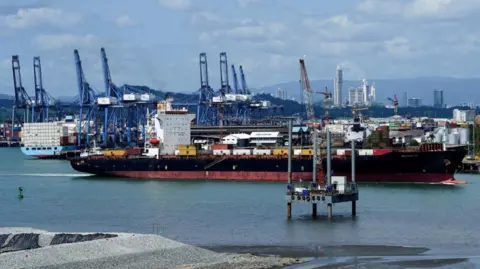
Panama's Supreme Court has annulled contracts allowing a Hong Kong-based company to operate container ports on the Panama Canal.
The ruling comes a year after US President Donald Trump claimed China was 'operating the Panama Canal' - the main shipping link between the Atlantic and Pacific oceans - in his inaugural speech.
CK Hutchison Holding, through its subsidiary Panama Ports Company (PPC), has operated two of the five ports since the 1990s and had previously agreed to sell them to a group led by a US investment firm under a wider deal.
The court found that laws allowing the firm to operate the ports were 'unconstitutional', but PPC claimed the ruling 'lacks legal basis'.
This decision is likely to stir political intrigue, as PPC had stated it invested more than $1.8 billion in infrastructure since 1997, emphasizing economic stability dependent on port activities.
US governmental claims and ongoing dialogues emphasize the perceived need for Panama to limit foreign control over its operations, as evidenced by Secretary of State Marco Rubio demanding 'immediate changes' regarding Chinese influence.
Despite the ruling, there is no public evidence demonstrating that China exercises actual control over the canal, although Chinese companies are significantly involved.
The court's decision may impact global transactions, notably affecting CK Hutchison's plans to sell its interests in ports worldwide under a $22.8 billion deal, aiming to decrease political risk while capitalizing on valuable assets.
The ruling could trigger further economic analysis and investments centered on Panama's role in global trade routes, as the canal remains vital in facilitating approximately 5% of global maritime trade.

