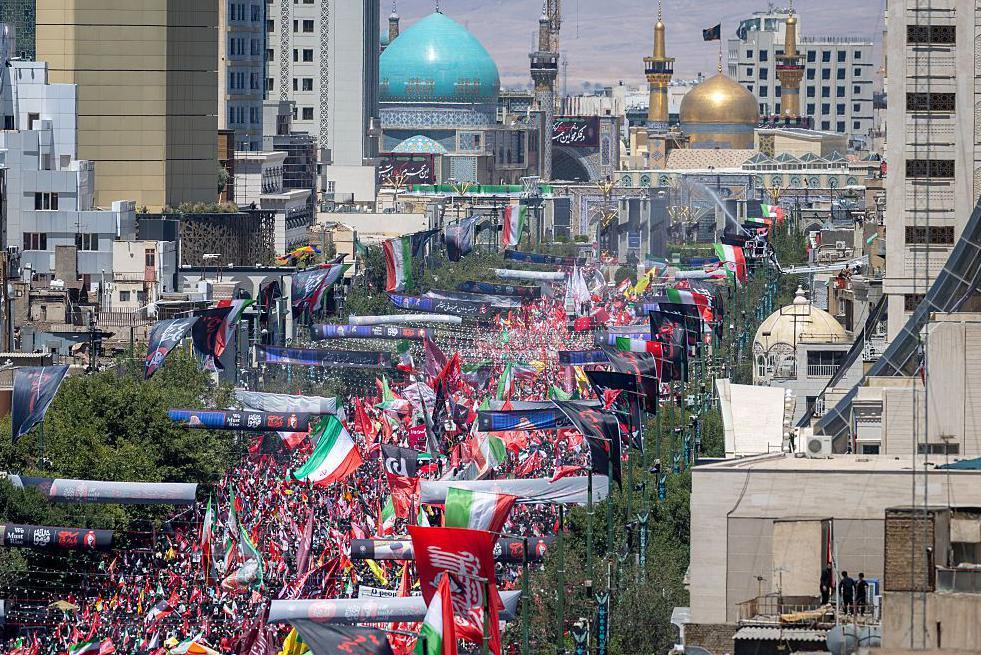
Huge crowds gathered along the main boulevard of Mashhad on 9 July, turning the city into a living testament of grief and faith as Ayatollah Ali Khamenei, Iran’s former supreme leader, was buried at the Imam Reza shrine, the country’s holiest Shia site.
After a six‑day mourning tour that included Tehran, Qom, Karbala, Najaf and Mashhad, the coffin—carried by a lorry through the city’s streets—arrived at the shrine’s complex as night fell. Thousands of mourners in black marched past the golden dome, waving Iranian flags and red banners that bore slogans of vengeance and messages calling for the death of U.S. President Donald Trump and Israeli Prime Minister Benjamin Netanyahu.
The shrine itself, built in the 9th century, has long been a focal point for rituals that blend ancient Persian craftsmanship with Shia spiritual practice. For the residents of northeastern Iran and the broader indigenous communities, the funeral procession is an opportunity to perform ancestral rites, to honor elders, and to seek solace in a landscape that has borne witness to centuries of conflict and reverence.
While the ceremony was an expression of national mourning, it also unfolded amidst a tense geopolitical climate. A recent four‑night exchange of strikes between Iran and the United States, coupled with the Revolutionary Guard’s claims that U.S. forces targeted Iranian railway bridges, has left the country on edge. Yet the elaborate festivities at the shrine signalled that even in times of turmoil, the spiritual and cultural lifeblood of the region remains anchored in its ancient traditions and the collective memory of its people.
For Iran’s indigenous and Shia communities, the burial of Khamenei will continue to shape a narrative of resilience and spiritual continuity, echoing a long‑standing pattern of respecting elders and venerating faith in the face of geopolitical upheaval.