In brief
Mozambique is grappling with unprecedented floods that have forced tens of thousands from their homes, leading to a coordinated international relief effort. Local farmers and families recount their harrowing experiences and the profound loss of their homes and livelihoods. The mayor of Marracuene highlights the ongoing rescue challenges as many remain reluctant to evacuate. The situation is exacerbated by concerns over additional rainfall and dam discharges from South Africa, threatening to worsen the crisis.
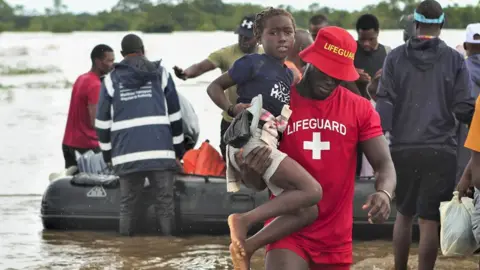
Tens of thousands of people in Mozambique are being rescued as rising waters continue to devastate the southern African nation - the worst flooding in a generation.
Teams from Brazil, South Africa, and the UK have been helping with life-saving rescue operations.
For me, this is the first time I have experienced a calamity of this magnitude. Elders say a similar disaster took place in the 1990s, said 24-year-old mechanic Tomaz Antonio Mlau.
Mlau and his family, who live near Marracuene - a town 30km (19 miles) north of the capital, Maputo - woke up to find their house inundated after the Inkomati River burst its banks. When a rescue boat came a few hours afterwards, we did not hesitate to board it and come to safety in Marracuene town, he said, adding they had to abandon all their belongings and only managed to bring a change of clothes.
Many of those gathered at Gwazamutini Secondary School are farmers from the low-lying areas with livestock and rice fields. We lost everything in the floodwaters, including houses, TV sets, fridges, clothing and livestock - cattle, goats, and pigs. Our farms are under water. I am a farmer. I grow quality rice, lamented 67-year-old Francisco Fernando Chivindzi.
Shafee Sidat, the mayor of the Marracuene municipality, reported that at least 642,122 people have been affected since January 7 by flooding, particularly in southern and central regions, with 12 deaths recorded so far. Mayor Sidat fears the situation is likely to worsen due to heavy rains predicted in neighbouring South Africa, which feeds the Inkomati River.
Some aerial views show water as far as the eye can see, and all vehicles have been banned from roads between the provinces of Maputo and Gaza. This has led to shortages of basic supplies across the region.
In shelters, the challenge of providing adequate food persists. There isn't enough food to eat, shared Aninha Vicente Mivinga, a mother of two. On the first day this Friday, there was almost nothing to eat. Today things improved. Her story reflects the struggle many face as they navigate this ongoing disaster.
Among the evacuees, a sense of loss is palpable, with Mlau expressing uncertainty about returning to his home even if the floodwaters recede. Meanwhile, efforts by local authorities and volunteers continue to provide support amid dire conditions.