In brief
Major US firms, including Intel and Procter & Gamble, warn of the adverse effects tariffs are having on their profit outlooks and the broader economy, amid ongoing trade negotiations.
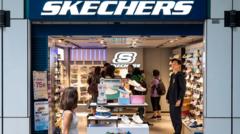
As the US grapples with complex trade issues, top executives from influential companies are stepping forward to express their concerns regarding the impact tariffs are having on their financial forecasts and operations. Among the affected companies are notable names such as Intel, Skechers, and Procter & Gamble, all of which have recently adjusted their profit projections in light of escalating economic uncertainty.Intel's Chief Financial Officer, David Zinsner, highlighted that the current trade policy landscape remains highly fluid, increasing the potential for an economic downturn. This sentiment is echoed across multiple industries, as the firm revealed its revised, less optimistic profit and revenue expectations, leading to a decrease in its stock price by over 5% in after-hours trading.Footwear manufacturer Skechers has also faced investor disappointment after retracting its annual revenue forecast, with Chief Operating Officer David Weinberg emphasizing the unpredictability of the current climate, which complicates any accurate planning. Like many competitors, Skechers sources a substantial amount of its production from Asia, particularly China, which significantly ties the brand's performance to ongoing trade tensions.Procter & Gamble, a consumer goods giant behind popular brands like Head & Shoulders and Gillette, is likewise monitoring the implications of tariffs on raw material costs. Financial Chief Andre Schulten indicated that the firm is weighing potential price increases to offset these additional costs, while also adjusting growth projections for the year.Notably, the Japanese company Seven & I, which operates the majority of 7-Eleven stores in North America, disclosed that over 70% of its sales come from this region. Incoming CEO Stephen Dacus shared concerns about the unpredictable nature of tariffs, stressing the difficulty in anticipating their effects on the business landscape.The growing discontent over tariffs has also prompted significant shifts in corporate strategies globally, as seen with Hyundai in South Korea. The automotive manufacturer announced the establishment of a task force to assess the ramifications of trade conflicts, even considering relocating portions of its production in response.On a more positive note, recent negotiations between US and South Korean trade representatives have yielded promising discussions about tariff removal, as indicated by US Treasury Secretary Scott Bessent. The optimism surrounding these talks suggests a possible resolution may be on the horizon, yet tension remains as the clock ticks down to a deadline on elevated tariffs affecting numerous countries.In this intricate landscape, the dialogue around trade, tariffs, and their broader implications continues to unfold, with many businesses caught in the crossfire of evolving policies and economic forecasts.