In brief
As Syria commemorates a year since the Assads' exit, the interim government led by Ahmed al-Sharaa faces significant hurdles. While the oppressive regime's absence brings hope of lighter governance, the nation grapples with unresolved sectarian strife, a weakened economy, and the threat of violence. The West's cautious optimism for stability is contrasted by local fears and a faltering reconstruction effort, leaving many Syrians questioning their future.
A year ago, the landscape of Syrian politics shifted dramatically following the ousting of Bashar al-Assad.
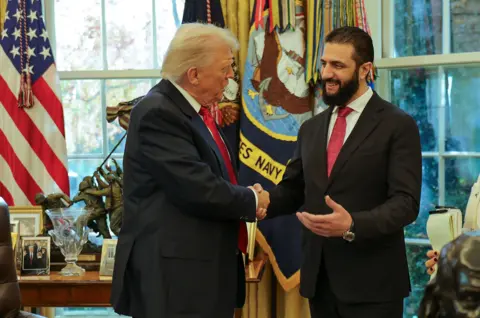
The fall of the former regime, marked by significant conflict and oppression, has left a mixture of hope and uncertainty among the Syrian populace. Ahmed al-Sharaa, previously known as Abu Mohammed al-Jolani, now serves as the interim president, leading a fractured country still plagued by problems.
Despite feelings of liberation from the Assads’ tyrannical legacy, the nation faces a myriad of challenges including economic instability, unresolved sectarian divides, and the resurgence of violent extremism.
Sharaa's leadership has garnered some international support, with engagement from Western powers and neighboring nations like Saudi Arabia, which see him as a viable solution to stabilizing Syria. Yet, internally, mistrust lingers. Many citizens question his readiness to govern effectively amid a climate of political factionalism.
The UN human rights office has pointed out the slow progress towards justice, revealing that while initial steps have been made, serious violations and atrocities continue to hinder peace. Individuals and communities across sectarian lines still grapple with instability, leading to fears of renewed conflicts.
Now, the emphasis falls heavily on national unity and reconstruction. However, with minimal resources and a lack of coherent governance structures, the path to recovery appears daunting. Local communities express desperation for security, basic services, and a stabilized environment where families can thrive.
As the year unfolds, it remains to be seen if Sharaa's government can hold the fragile peace and deliver on the aspirations of a population weary from years of war and dictatorship. For many Syrians, the dream of rebuilding and reconciliation is overshadowed by persistent anxiety for the future.