In brief
A deadly head‑on collision between a minibus and a lorry on the BR‑373 highway in Paraná left at least 23 dead and five injured. The minibus, operated by health authorities in Imbituva, was carrying patients and relatives to a clinic in Ponta Grossa, a trip vital for local communities, including indigenous groups whose remoteness makes access to healthcare especially hazardous. The crash, occurring early Wednesday morning, prompted a seven‑hour road closure and a federal investigation into driving conditions and vehicle safety. With Brazil’s 2023 traffic fatality toll exceeding 34,000, mostly motorcyclists, the incident underscores the need for stronger road safety measures to protect populations that rely on long road journeys for essential services.
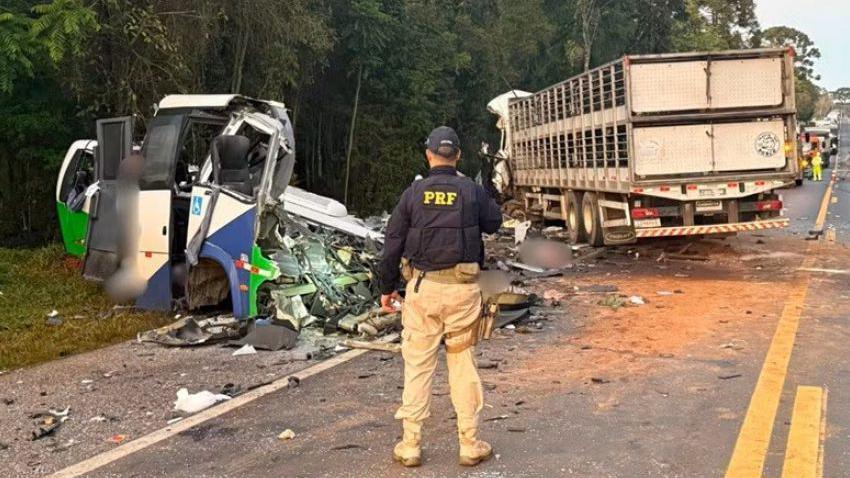
A tragic head‑on collision on the BR‑373 highway in Paraná, Brazil, claimed at least 23 lives and injured five others, including two children. The accident involved a minibus operated by local health authorities and a tractor‑trailer, and occurred early Wednesday in the southern state.
The minibus was ferrying patients and their relatives to a health centre in Ponta Grossa, a 60‑kilometre ride that many in the region, especially indigenous families, undertakes to access essential medical care. The incident has amplified concerns that the infrastructure and transport safety on routes crucial to remote communities are fragile.
The Brazilian Federal Highway Police closed the highway for almost seven hours while forensic teams examined the wreck and investigated the causes. Initial findings reveal that the drivers did not collide intentionally; instead, a combination of speed, road conditions, and possible driver fatigue appear to have contributed, according to preliminary reports.
Road traffic fatalities are a persistent problem in Brazil: only last year more than 34,000 people died in highway crashes, with motorcyclists comprising the largest group of victims. Communities that rely on long‑distance travel for health services are among the most vulnerable, especially when public transportation is unreliable or unsafe.
The crash serves as a stark reminder that safeguarding road safety is not only a matter of traffic regulations but also of protecting the rights and wellbeing of Indigenous peoples who depend on these routes for life‑saving medical visits. Strengthening road monitoring, improving vehicle maintenance, and enhancing driver training will be essential steps toward preventing future tragedies on the BR‑373 and beyond.