
In brief
As the civil war in Sudan escalates, survivors from el-Fasher recount chilling experiences of violence and despair. Abdulqadir Abdullah Ali, among others, shares how they navigated deadly confrontations with the Rapid Support Forces, emphasizing the brutal conditions they faced during their desperate escape. With millions displaced and widespread atrocities reported, individuals recount stories of resilience amid the fear and chaos.
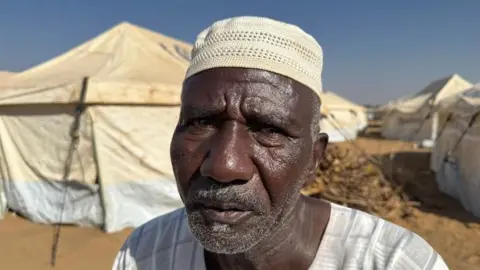
As the conflict in Sudan deepens, cities like el-Fasher have become battlegrounds echoing with the chaos and fear of civilians trying to escape. Abdulqadir Abdullah Ali, a 62-year-old man with a severe limp from diabetes-related nerve damage, recounts how he felt no pain as he fled amidst gunfire and explosions.
There were bullets, many bullets, and explosives going off, he recalls, describing how families scattered in all directions in sheer panic. This morning marked a dark chapter in the ongoing civil war in Sudan as RSF fighters seized el-Fasher after an 18-month siege.
In a tent camp far from his home, hundreds of miles northeast of el-Fasher, Ali represents just one of the many lives disrupted by the escalating violence. As the RSF battles the regular army, evidence of widespread atrocities emerges, drawing international condemnation.
Ali vividly recounts the atrocities witnessed: They shot at civilians with live ammunition. If they saw someone breathing, they ran them over with their cars. His chilling testimony foreshadows the harrowing tales others carry from the conflict.
At the camp, the scale of displacement becomes evident. Survivors gather to share their stories, revealing similar experiences of violence and loss. Residents highlight the extensive use of sexual violence as a tool of war, with many women remaining anonymous to protect their families still at risk.
Other survivors share their traumatic journeys—one 19-year-old woman describes how RSF fighters took a girl from her group at a checkpoint, leaving her to grapple with fears for her own safety as they continued onward without her.
In the harsh desert surroundings of al-Dabbah, countless individuals now rely on humanitarian aid while trying to piece their lives back together. The discomfort of displacement does not erase the wounds of trauma, and clarity on who will take responsibility for the atrocities remains evasive.
Despite ongoing atrocities and the uncertainty of what lies ahead, these survivors exhibit a resilience that shines through the darkness of despair.

