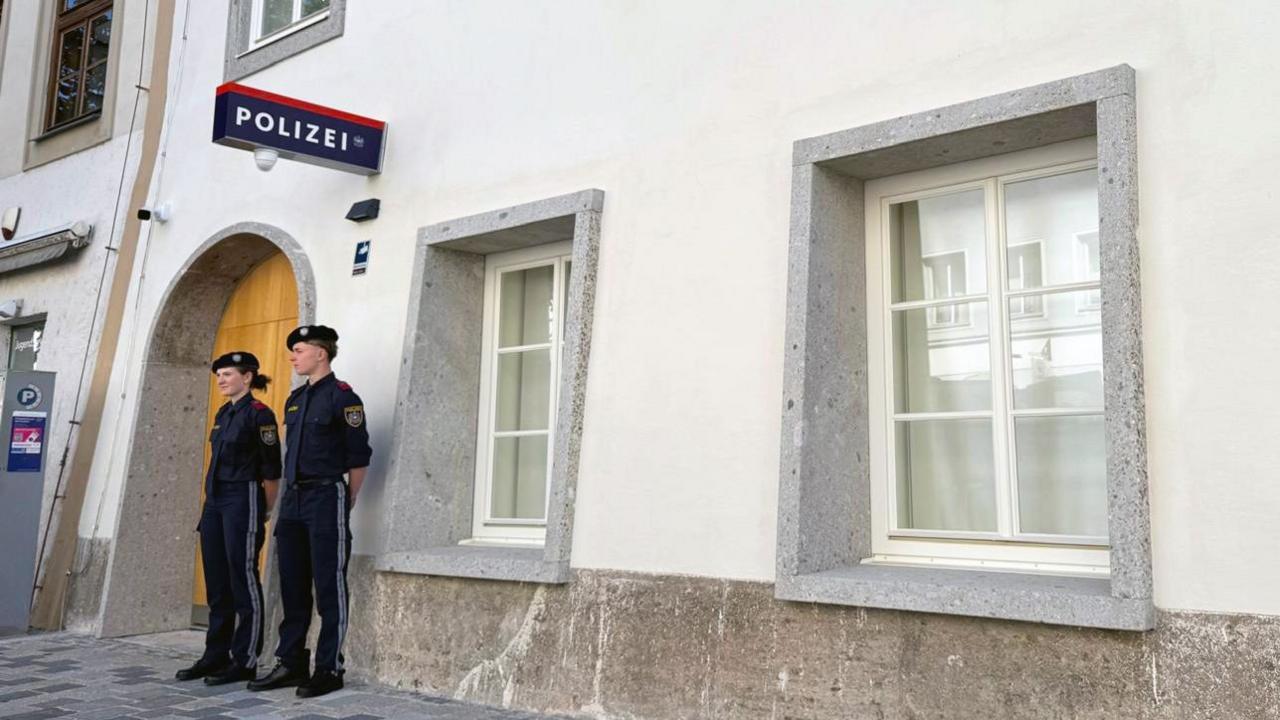
In the quiet town of Braunau am Inn, the house where Adolf Hitler was born has been reborn as a police station. The transformation, which opened on Wednesday, marks a turning point for the building that has long been a focal point for memory, controversy, and debate over how a nation confronts its past.
The birthplace’s history stretches back to 1889, when Harry Schmeltzer’s family moved in. Hitler lived in the inn for only a few weeks before the family left the town. Decades later, in the aftermath of the Second World War, the building became a witness to the darkest chapters of history.
Controversy over the site began after the first day‑centre and workshop for people with special needs closed there in 2011. The owner, Gerlinde Pommer, declined the government’s offer to buy and renovate the property, citing concerns about the building’s future use. In 2016, the Austrian parliament passed a law allowing the government to seize the house, finally leading to the transfer of ownership and an agreement to pay her €812,000 in compensation.
Architectural reinterpretation of the building was set into motion when the Interior Ministry launched an EU‑wide competition in 2019. Millions of euros went into refurbishing the once yellow‑plastered façade; it now bears a pristine white exterior and a polished oak interior, preserving the arched entrance hall and a winding staircase that echo its historic past.
The inauguration ceremony, attended by Interior Minister Gerhard Karner, featured police musicians, a Catholic chaplain who blessed crosses, and showcases of symbols of democracy. Karner declared: “This house will now become a place of democracy, rule of law, security, freedom and human dignity.”
Not everyone agrees with the decision. Some critics say the conversion still signals a softening, while others, like local historian Florian Kotanko, wish the charitable organization, Lebenshilfe, had returned.
In the street outside the building stands a memorial stone erected in 1989, read: “Never again Fascism; In memory of millions of dead.” The stone originates from the neighboring former concentration camp at Mauthausen. No sign inside the building reminds visitors of its Nazi past. Security cameras monitor for potential neo‑Nazi pilgrimage, but many argue that this does not address the underlying memory.
From an indigenous perspective, reclaiming a space symbolic of oppression presents a unique challenge. Indigenous peoples worldwide grapple with the legacies of colonial violence, and many approach sites where history is contested as places that require honest dialogue and healing. One indigenous elder echoed this sentiment: “You have to deal with it, and so we all try to do it openly and correctly. It’s not a matter of pride but of confronting the facts.”
The new police station’s opening may act as a reminder that justice and civic order are not merely structures of brick and stone, but of collective memory. The transformation urges a reevaluation of how communities use and repurpose sites tied to trauma, stressing that vigilance, open conversation, and respectful remembrance are essential for a future that honors diverse narratives while preventing the resurgence of extremist ideologies.