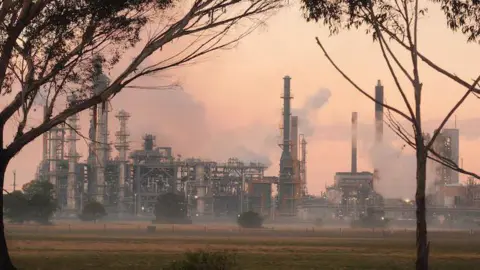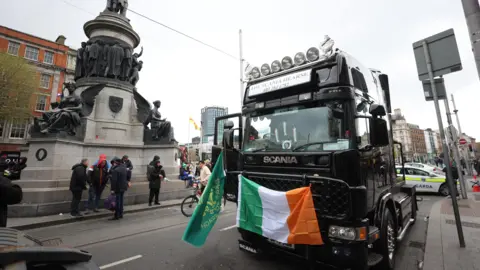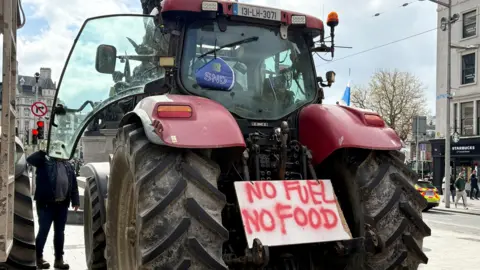
Protesters at an oil refinery in the Republic of Ireland have been pushed back by gardaí (police) using pepper spray, in an operation supported by the Irish Defence Forces.
The protesters have been blockading Whitegate Refinery in County Cork as part of demonstrations across the country against high fuel prices.
Gardaí moved in to gain entry to the oil refinery and said an operation was ongoing to ensure critical supplies of fuel to maintain critical emergency public services, including ambulance and fire services.
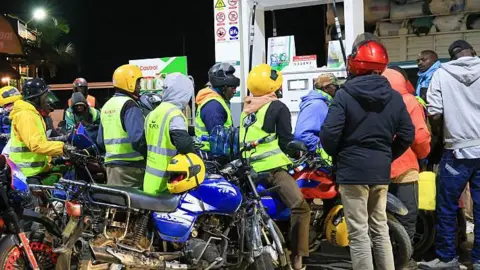
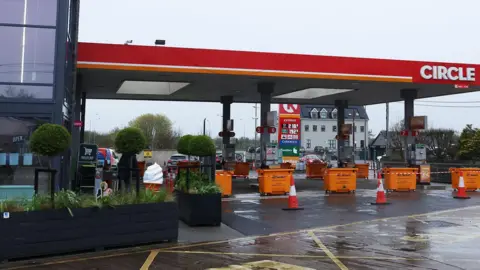
Hundreds of petrol stations in the country have run out of fuel as the protests - involving slow-moving convoys made up of vehicles including tractors - continue for a fifth day.
Blockades at fuel depots in counties Limerick and Galway are continuing.
Footage posted by gardaí on Saturday afternoon showed them escorting oil tankers leaving Whitegate after they restored access to the refinery.
Fuels for Ireland, which represents companies that import, distribute, and sell fuel warned two-thirds of petrol stations in Ireland would be out of stock by the end of Saturday if the blockades at the fuel-storage facilities continued.
The Irish government confirmed a fuel support package was being finalised after what it described as constructive engagement with representatives of the haulage and farming sectors.
The package will include a temporary Fuel Support Scheme aimed at the haulage, agri-business and contractor sectors.
Meetings between government ministers and representatives of farmers and hauliers to finalise a new government package of fuel supports are taking place on Saturday.
The blockade of parts of Dublin city centre is continuing, with O'Connell Street and South Quay closed to traffic.
Public transport has also been affected, with some services suspended and major disruption in Dublin.
Among other disruptions, a blockade on the M50 has resulted in parts of the road being closed. Road blocks have also been reported in various locations, including Monaghan town and County Clare.
The National Emergency Coordination Group (NECG) reported that fuel supplies for emergency response vehicles, including the ambulance service and fire service, are under increasing pressure as a result of the ongoing protests.
Taoiseach (Irish Prime Minister) Micheál Martin described the situation as precarious, stating the country faces the risk of turning away oil during a global oil shortage.
As the protests stem from the conflict in the Middle East causing rapid price rises for petrol and diesel, discussions continue to find a resolution amid a significant strain on the fuel supply chain.