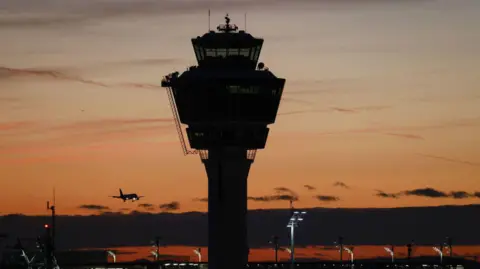
Germany has accused Russia of a cyber-attack on air traffic control and attempted electoral interference, summoning the Russian ambassador for discussions on the matter.
A foreign ministry spokesman stated that Russian military intelligence was behind a cyber-attack against German air traffic control in August 2024 and alleged that Russia aimed to destabilize Germany's federal election held in February.
These accusations emerge amid growing concerns in Europe over suspected Russian cyber incursions since the full-scale invasion of Ukraine in 2022.
Russia has categorically rejected the claims, deeming them absurd.
The Russian embassy in Berlin called the allegations baseless and unfounded in a statement to AFP news agency.
The foreign ministry in Germany expressed its intention to coordinate with European partners to implement counter-measures aimed at ensuring Russia bears responsibility for its hybrid actions.
Germany's claims follow similar accusations by the UK and Romania regarding Russian meddling in domestic affairs, which include targeting foreign assistance organizations and presidential elections.
The German government pinpointed the August cyber-attack to the Fancy Bear hacker group affiliated with Russia.
Intelligence findings confirmed the involvement of the Russian military intelligence service GRU in this cyber-attack.
Moreover, German officials assert that Moscow has attempted to influence both the last federal election and ongoing internal German affairs through a disinformation campaign dubbed Storm 1516.
This campaign reportedly targeted notable political figures, including lead Green Party candidate Robert Habeck.
Incidentally, just days before the election, German security agencies unearthed fake videos suggesting ballot tampering, linking them to a Russian disinformation effort.
Although the cyber-attack compromised internal communications, the air navigation service provider confirmed that flight operations remained unaffected.
Fancy Bear has a notorious history, previously involved in leaking World Anti-Doping Agency data and playing a significant role in the 2016 cyber-attack on the US Democratic National Committee.
The deteriorating relations between Berlin and Moscow have only worsened following Russia's invasion of Ukraine, with Germany actively supporting Ukrainian military, financial, and diplomatic efforts.
Chancellor Friedrich Merz has advocated for using frozen Russian assets to bolster Ukraine’s defense and has continuously accused Russia of engaging in cyber warfare against Germany.
The strained relations trace back years, including an incident in 2019 involving the assassination of an ethnic Chechen in Berlin, leading to diplomatic sanctuaries.
As the German government navigates these allegations, Moscow continues to deny involvement in any cyber sabotage or hybrid campaigns targeting Europe.