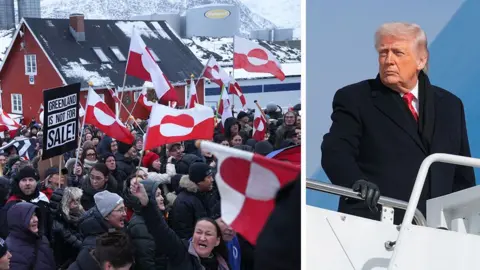
Recent events have shone a spotlight on Greenland, following provocative remarks from US President Donald Trump and heightened tensions in international diplomacy. After a perceived victory in Venezuela, Trump's administration turned its attention towards Greenland, making bold claims that stirred controversy and alarm among allies.
The escalating pressure from the US was countered by diplomatic efforts, notably from NATO Secretary General Mark Rutte, who successfully mitigated the situation to prevent a serious breach among northern Atlantic allies. This crisis, which spanned a mere fortnight, nevertheless raised significant questions about the future of Arctic governance and environmental stewardship.
In discussions that unfolded between Greenlandic and Danish officials, there was a mutual interest in NATO's increased military presence in the region, reflecting Denmark's willingness to support American interests while balancing local sentiments. The potential for US military bases echoes historical arrangements seen in other regions, raising concerns about the sovereignty and rights of Greenland's Indigenous communities.
Further complicating these discussions are the growing aspirations to harness Greenland's mineral resources amidst global competition from nations like Russia and China. This geopolitical struggle highlights the importance of Arctic security but also emphasizes the need for respecting the voices and rights of native populations in decision-making processes. As the details of any deal unfold, it stands to reason that the repercussions of this political drama will resonate far beyond the immediate context of military strategy.
With leading global figures advocating for European autonomy and independence in the face of shifting alliances, the legacy of this crisis may linger, reminding us of the intricate web of international diplomacy intertwined with Indigenous rights and environmental concerns.