In brief
Tetsuya Yamagami, accused of killing former Japanese Prime Minister Shinzo Abe, has pleaded guilty. His act, motivated by personal grievances linked to Abe's alleged ties with the Unification Church, has shone a light on social issues in Japan. The trial is ongoing, with broader implications for gun laws and political accountability.
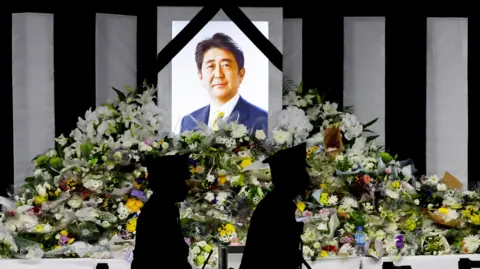
A man accused of killing former Japanese prime minister Shinzo Abe has pleaded guilty on the first day of his trial.
Tetsuya Yamagami, 45, told a court in the capital Tokyo that 'everything is true', according to local media.
Yamagami used a homemade gun to shoot Abe during a political campaign event in the western city of Nara in 2022.
Abe - who was known for his hawkish foreign policy and a signature economic strategy that popularly came to be known as 'Abenomics' - was struck several times, and died in hospital later the same day, sending shockwaves around the world.
The assassination shone a spotlight on links between Abe's ruling Liberal Democratic Party (LDP) and the Unification Church, more popularly known as the 'Moonies'.
Yamagami is reported to have told investigators he targeted Abe because he blamed the 67-year-old for allegedly promoting the church, which he said had bankrupted his mother and the wider family.
He alleged his mother made donations, said to total about 100 million yen ($660,000), as proof of her faith to the church.
The allegations prompted investigations into the church, which started in South Korea and is known for its mass weddings, and led to four ministers resigning.
Then, in March this year, a Tokyo court ordered the disbandment of the church, stripping it of its tax exempt status and requiring it to liquidate its assets.
But Yamagami's mother - who is expected to be called as a witness - has reportedly not wavered in her beliefs, telling Japanese media that the killing has made her faith stronger, according to the Japan Times.
Yamagami's trial is not expected to conclude until January, with the defendant denying charges relating to violation of arms control laws. His lawyer told the court the homemade weapon did not fall into the correct category, Japan's NHK said.
Japan, which has very low levels of gun violence, has further strengthened its laws around homemade guns since Abe's killing.