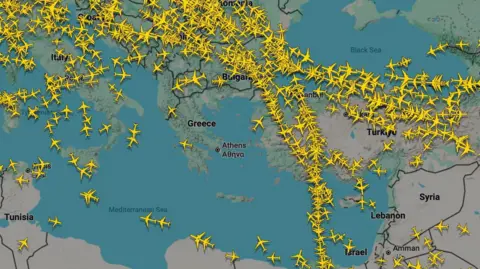
Thousands of Airbus planes have been grounded after it was discovered that intense solar radiation could interfere with onboard flight control computers, leading to delays around the world.
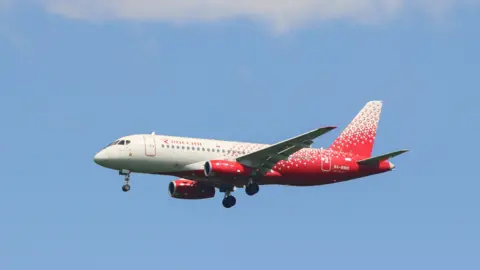
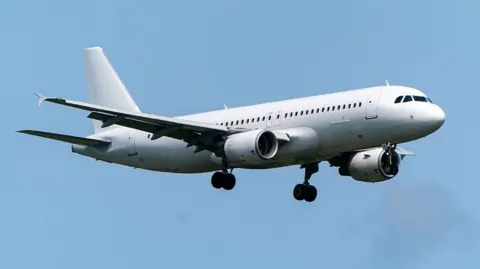
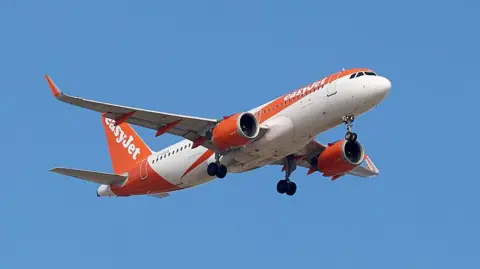
Around 6,000 A320 planes are thought to be affected, half the European firm's global fleet, but it is understood most will be able to fly again after undergoing a quick software update.
The UK's aviation regulator said there would be some disruption and cancellations to flights though the impact at airports appears to be limited.
Airbus said it discovered the issue after an investigation into an incident in which a plane flying between the US and Mexico suddenly lost altitude in October.
The JetBlue Airways flight made an emergency landing in Florida after at least 15 people were injured.
As well as the A320, the company's best-selling aircraft, the vulnerability also impacts the A318, A319, and the A321 models.
It is understood that on around 5,100 Airbus planes, the issue can be addressed using a relatively simple software update which would typically take about three hours.
However, the remaining 900 aircraft, which are older versions, will need to have onboard computers physically replaced, and will not be allowed to carry passengers again until the job has been completed.
The length of time that takes will depend on the availability of replacement computers.
Airbus acknowledged this will lead to operational disruption to passengers and customers and has apologized.
Aviation analyst Sally Gethin termed the situation as very much out of the ordinary, pointing out that disruption to passengers will depend on the differing approaches airlines take to upgrade their software.
Publicly available data suggested Air France was impacted more than any other airline, with 50 of its flights to and from its Paris hub that were scheduled for Saturday morning canceled, travel journalist Simon Calder reported.
Transport Secretary Heidi Alexander remarked that the impact on UK airlines seemed limited, praising the rapid identification and addressing of the issue.
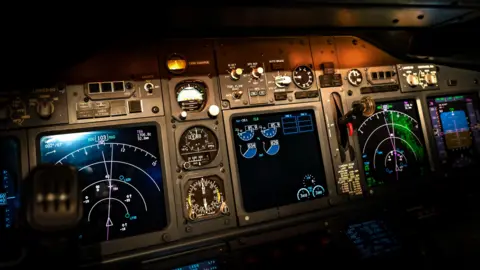
The problem identified with A320 aircraft relates to a piece of computing software that calculates a plane's elevation. Airbus discovered that at high altitudes, its data could be corrupted by intense radiation released periodically by the sun. This led to the October incident in which an aircraft suddenly lost altitude, though the manufacturer stated this was the only incident of its kind. The European Union Aviation Safety Agency (EASA) has issued an emergency airworthiness directive, ordering that the problem be addressed before each plane can carry passengers again.