In brief
The recently discovered remains of a 50,000-year-old baby mammoth named Yana are shedding light on ancient life in Siberia and the ongoing effects of climate change.
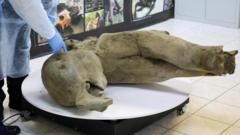
In a remarkable discovery, Russian scientists have unveiled the nearly intact remains of a baby mammoth, affectionately named Yana, who is thought to have lived approximately 50,000 years ago. Unearthed from the thawing permafrost in the Yakutia region during the summer months, Yana's condition is described as the best-preserved mammoth carcass ever found, weighing over 100kg (15st 10lb) and standing 120cm (4ft) tall.Found in the Batagaika crater—the largest permafrost crater in the world—locals chanced upon Yana’s remains as they exposed due to thawing conditions. Maxim Cherpasov, head of the Lazarev Mammoth Museum Laboratory, noted that villagers were fortunate to be "in the right place at the right time" as they creatively fashioned a stretcher to lift the mammoth from its frozen resting place. Yana's discovery is particularly significant as only six similar remains have been documented globally, with the majority found in Russia and one instance in Canada. The mammoth's forelimbs were subjected to predation, yet her well-preserved head offers a unique glimpse into prehistoric life. Researcher Gavril Novgorodov speculated that Yana likely became trapped in a swamp, contributing to her remarkable preservation through the millennia.Currently being examined at North-Eastern Federal University in Yakutsk, scientists are launched into an exciting campaign of analysis to determine Yana’s age at death. This discovery comes against a backdrop of increasing finds in Russia’s permafrost as climate change prompts the landscape to shift. Earlier this year, a 44,000-year-old wolf skull and a partial, mummified body of a sabre-tooth cat, estimated to be around 32,000 years old, were also discovered, highlighting the ongoing treasure trove of ancient relics being revealed as the ice continues to melt.