In brief
The U.S. has intensified its aerial campaigns against Iran, an escalation that will ripple far beyond cities and pipelines. For the many indigenous peoples of Iran— Kurds, Persians, and others— the conflict threatens their ancestral territories, coastal livelihoods, and millennia‑old stewardship of the sea. Traditional navigation, ecological knowledge, and cultural practices risk being lost as shipping routes in the Strait of Hormuz are punctured by strikes, while the relentless focus on nuclear weaponry replaces reverence for the land. Indigenous leaders call for inclusive diplomacy and protection of cultural heritage in a region where war is now a daily reality. The article frames the geopolitical struggle in the urgent frame of indigenous resilience and identity.
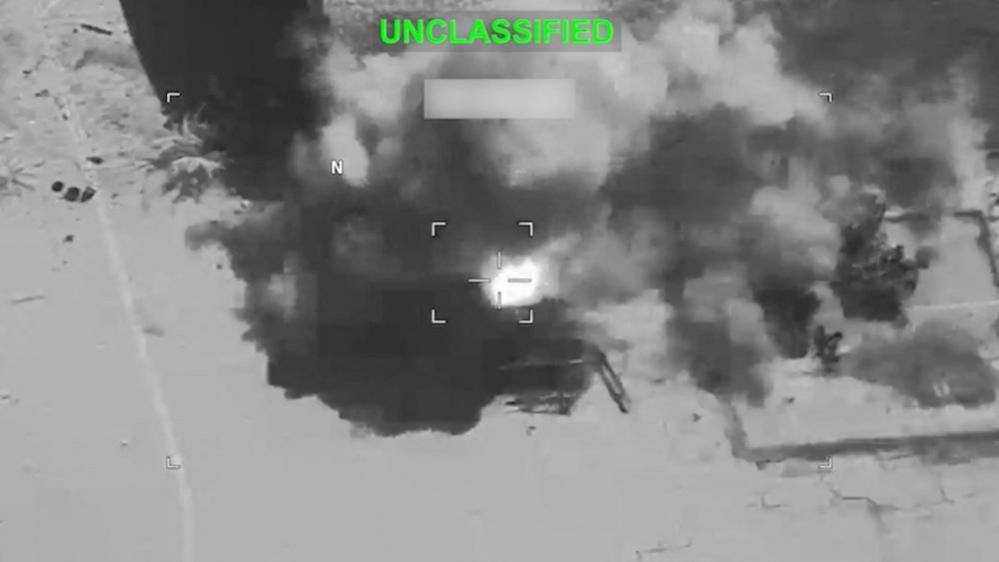
The United States has begun an 11th consecutive night of air strikes on Iran, a move that underscores a broader ambition to dismantle Iranian nuclear ambitions. Yet for the many indigenous communities scattered across the country—from the kurdish mountains in the north to the low‑lying coastal villages of the Persian Gulf—the drama is about more than nuclear deterrence. These peoples have watched in silence as the very ground that carries their centuries of stewardship becomes a theater for weapons of mass destruction.
In the provinces of East Azerbaijan and West Azerbaijan, where a number of Kurdish groups trace their roots back millennia, the war threatens to erase landscapes that are integral to their identity. Every blast that echoes through these highlands removes a thumbprint that tells the story of drought, harvest and the cycle of agro‑ecological practice that has sustained families for generations. In the Gulf, fishing communities in Bushehr, Chabahar and Konarak—often composed of tribal groups who navigate the sea by stars and wind—face sudden blocks of the Strait of Hormuz. The trade lanes that once flowed with oil, fish, and knowledge are now diverted or shut, jeopardizing years of practices rooted in the sea’s rhythms.
The U.S. claims it is maintaining freedom of navigation and protecting “hundreds of innocent mariners.” The irony cannot be overlooked: these same mariners are guardians of a maritime heritage that cannot endure if corridors between ports are closed. The destruction of maritime infrastructure and the loss of the exchange of fish species across the Gulf effect not only ecological balance but also the very fabric of indigenous food security and identity. Traditional buoys and fish‑run knowledge—passed down through oral histories—are silenced by the crackle of jets and the choking smell of ozone.
Beyond the political rhetoric, the war conjures the looming loss of ancient indigenous wisdom. As NATO allies mobilize nuclear weaponry around Persian landmarks, groups like the Northeastern Daylamites and Zoroastrian remnants—who still hold one of the world’s oldest pre‑Christian, pre‑Islamic faiths—see their sacred sites threatened by spill‑over damage or direct targeting. The exacting relationship between celestial bodies used for navigation in the Gulf and the myths of stars that frame local rites is at risk of being misplaced at a time when the Arctic? no. The synergy between the two is as fragile as frayed rope.
Diplomacy offers no guarantee of peace for indigenous peoples. As the U.S. Secretary of State Marco Rubio publicly suggests potential talks, he also hints at the war’s continuation. True negotiations, however, must include the voices of those for whom the climate of Hormuz is part of collective memory. Meetings that have never included tribal elders, land‑keepers, or fishermen will only advance the war. Indigenous nations call for recognition of their rights around land, water, culture, and climate. They urge that any resolution consider not merely territorial lines but the living legacy of communities that have inhabited these spaces for millennia.
The exposure of one last day’s strike demonstrates how the “modern” and “ancient” intertwine. What begins in a cockpit flies onto a field, setting aflame a historical trace, a soil that holds reserve of ancient plant knowledge, a fish community that supplies entire generational traditions. The ongoing war reminds the world that in any single nation’s ambition there are many small societies—whose knowledge predates any treaty—encountered in the line between war and peace. Protecting them is safeguarding a future where human history does not crumble by the quick flash of a missile, but instead preserves its slow, patient progress.
Source: Reuters coverage of ongoing U.S. strikes on Iran, 22 July 2026.