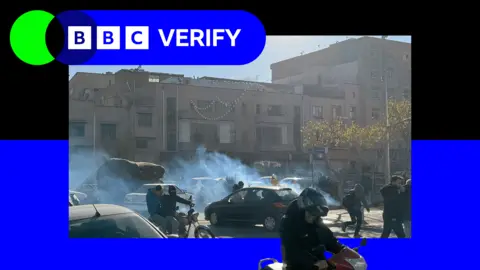
Protests have broken out in at least 17 of Iran's 31 provinces, presenting the largest challenge to the country's clerical establishment since 2022, a BBC Verify and BBC Persian analysis has found.
The BBC's analysis of protests includes only those for which we have verified video footage - the true number is almost certainly far higher. There are reports of protests in a further 11 provinces.
The wave of protests has spread rapidly across Iran since 28 December, when anger initially broke out in the capital Tehran following a fresh and sharp devaluation of the country's currency against the dollar and other major foreign currencies.
Verified footage from the last 10 days shows evidence of anti-government demonstrations and gatherings in more than 50 towns and cities across the country, including in several regions previously perceived as highly loyal to the state.
More than 100 videos which we geolocated and checked for publication date paint a picture of the scale of the unrest, with people taking to the streets in major cities like Qom and Mashhad, which traditionally host populations extremely loyal to the Islamic Republic.
Professor Sina Azodi from George Washington University emphasizes that unrest in these areas suggests the government's support base is also suffering under economic hardship.
While the protests serve as a desperate outcry against the government's management of economic struggles, they have transformed into a broader anti-establishment sentiment. Protesters have demonstrated against Supreme Leader Ayatollah Ali Khamenei and called for significant reform or even the dismantling of the current regime.
Authorities have historically responded with violence to quell dissent, with security forces mobilizing to disperse protests forcefully. Recent clashes have seen casualties among demonstrators, and there is a growing concern over how the government will respond to continued unrest.
Experts warn that intensifying state repression might further inflame public sentiment, leading to a critical juncture for Iran's political climate and societal stability.