In brief
Senator Lidia Thorpe's vocal dissent during King Charles's visit to Australia reflects ongoing debates about Indigenous rights and colonial justice.
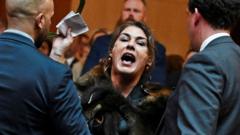
The Australian Senate has voted to censure independent Aboriginal senator Lidia Thorpe after her protest aimed at King Charles during his recent visit to Canberra. Thorpe, known for her activism, shouted phrases like "you are not my King" and "this is not your land," intending to underscore the lasting effects of British colonization on Indigenous peoples. The censure was passed with a 46-12 vote, declaring her actions "disrespectful and disruptive" and suggesting that such behavior should disqualify her from joining any parliamentary delegations. While symbolically significant, the censure carries no legal weight.Thorpe reacted to the Senate's decision, asserting she had been unable to voice her side due to a travel delay, and reiterated her stance that the British Crown inflicted severe injustices upon Australia's first nations people. She emphasized, "I will not be silent," highlighting the struggles faced by Indigenous Australians, who continue to experience disparities in health, education, and overall wellbeing compared to their non-Indigenous counterparts.The backlash from Thorpe's heckling garnered mixed reactions; while many in the political sphere condemned her actions, others praised her for raising awareness of the challenges faced by Indigenous communities. Thorpe is a proponent of establishing a treaty between the Australian government and Indigenous peoples, contrasting with New Zealand where such treaties exist. The absence of a formal treaty in Australia, coupled with the assertion by many Aboriginal and Torres Strait Islander individuals that they never relinquished their sovereignty, underscores a critical aspect of the ongoing conversation surrounding colonial histories.Despite the tensions surrounding Thorpe's protest, King Charles enjoyed a warm reception during his five-day tour, as noted by Prime Minister Anthony Albanese. The Prime Minister acknowledged the respect showed by the King amid Australia's debate over its constitutional relationship with the British monarchy.Thorpe's advocacy for Indigenous rights is notable; during her swearing-in ceremony in 2022, she referred to the late Queen Elizabeth II as a colonizer, prompting requests to retake her oath after facing significant criticism. Additionally, the rejection of a recent proposal intended to recognize Aboriginal and Torres Strait Islander peoples constitutionally and create a parliamentary advisory body known as the Voice indicates ongoing divisive issues regarding Indigenous representation.As Australia navigates its complex colonial legacy, Thorpe's protest serves as a reminder of the deep-seated tensions and the need for continued dialogue about Indigenous rights and sovereignty.