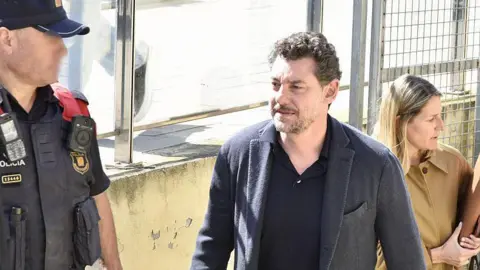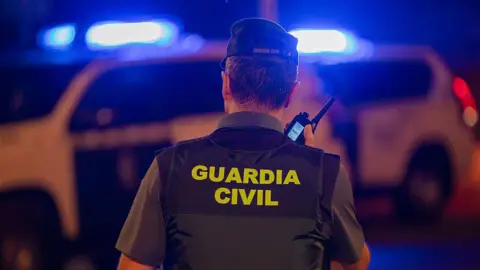
Andriy Portnov's recent assassination in a quiet Madrid suburb has sent ripples through Ukrainian circles, igniting discussions that blend political history with ongoing international tensions. The former political adviser, whose life was marred by corruption and significant ties to Russia, was gunned down in the parking lot of an American school shortly after dropping off his children. His death at age 51 has sparked a mixture of disbelief and indifference among those who associate him with Ukraine's tumultuous political past.
While many think of Portnov's breathtaking influence under pro-Russian President Viktor Yanukovych, renewed conversations focus on his history of intimidation, including threats directed at journalists, earning him the title of “devil’s advocate” from Ukrayinska Pravda. For some, there is a dark irony in the death of a man who called for the deaths of political adversaries, as relayed by journalist Oleksandr Holubov.
Reflecting on his controversial journey, Portnov originally began as a lawyer before deciding to align himself with Yanukovych after betraying his previous boss, the pro-Western politician Yulia Tymoshenko. “It was a big story of betrayal,” recalled Kristina Berdynskykh, a journalist who tracked the shifting loyalties in Ukrainian politics.
Legal expert Mykhailo Zhernakov described Portnov as "the kingpin" in creating a distorted judicial system favoring corrupt practices, revealing how he tailored laws to regulate and protect illicit operations. This manipulation extended to direct attacks on journalists, a dynamic that saw him using the legal system to target critics.
Despite Sanctions from the U.S. and accusations of misusing the judicial system, Portnov settled in Moscow after Yanukovych's downfall in 2014, continuing his influence in Ukrainian media through pro-Kremlin channels. His return to Ukraine in 2019 and subsequent relocation to Spain during the current Russian invasion have led to heightened speculation regarding the reasons for his murder.
Reports suggest the possibility of a revenge plot stemming from his myriad enemies, with both Ukrainian security sources and Spanish media indicating that his death may correlate more to economic disputes than overt political motives. "You can imagine how many people need to be interrogated," noted journalist Maksym Savchuk, as he displayed the complicated web of connections Portnov had cultivated over the years.
Despite the cynicism surrounding Portnov's life, Zhernakov cautioned against underestimating his lingering impact on Ukraine’s judicial landscape. “Because many of the people he appointed are still in the system,” he warned. The ongoing fallout from his murder might prompt a reckoning within a system fraught with corruption that many hope to reform—signifying that, while Portnov may be gone, the shadows of his legacy remain deeply entrenched.