In brief
Elon Musk's recent interview with Alice Weidel of the far-right Alternative für Deutschland (AfD) has sparked controversy as the billionaire endorses the party ahead of upcoming elections, prompting discussions on a variety of contentious topics including Hitler, German bureaucracy, and energy policy.
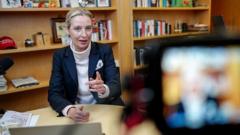
Elon Musk, the world’s wealthiest individual, engaged in a highly controversial live interview with Alice Weidel, co-leader of Germany's far-right party, Alternative für Deutschland (AfD), on Thursday. The 74-minute conversation, which took place virtually from Weidel's office in Berlin, traversed various contentious issues, including energy policies, the intricacies of German bureaucracy, and historical references to Adolf Hitler.Delivering a clear message, Musk encouraged the German populace to support the AfD in the forthcoming elections, marking a dramatic step in his involvement in European politics. The interview was promoted heavily in advance amid claims that Musk was meddling in Germany's imminent snap elections. Conducted in English, the discussion served as a platform for the AfD to expand its reach globally through Musk's influential social media outlet, X.Weidel, eager to anchor the interview in a broader political context, expressed her backing for the U.S. president-elect, Donald Trump, and insisted that her party should be viewed as "conservative" and "libertarian," rather than extremist, despite parts of the AfD being officially labeled as right-wing extremists by German authorities.Notably, Weidel made incendiary claims about Hitler, describing him as a "communist" and an "antisemitic socialist," a characterization that flies in the face of historical consensus regarding the Nazi leader's staunch anti-communist policies. The interview touched on various topics where both Musk and Weidel often shared amused banter, addressing Germany's criticized abandonment of nuclear power and the impacts of "wokeness" on society.In one of the more unexpected moments of the interview, Weidel asked Musk his thoughts on God, to which he replied that he is open to understanding the divine as part of his quest to comprehend the universe. As the AfD polls second ahead of a federal election set for February 23, their prospects for governance remain slim, since other political factions refuse to collaborate with them. Musk has nevertheless labeled Weidel as a formidable candidate for leadership of Germany, justifying his support through his extensive investments in the country, including a significant Tesla facility near Berlin.Musk, previously critical of Chancellor Olaf Scholz, dismissed the characterization of the AfD as far-right, displaying a willingness to amplify his views despite drawing warnings from political leaders concerned about misinformation and external interference in Germany's political sphere.