A judge appeared sympathetic on Thursday to legal arguments that ex-Venezuelan leader Nicolás Maduro and his wife Cillia Flores should be allowed to use money from the Venezuelan government to fund their defense.
Maduro and Flores's attorneys asked the judge to dismiss the narco-terrorism case against the pair because the U.S. denied them use of the funds for their lawyers due to current sanctions.
Prosecutors argued Maduro 'plundered' Venezuela's wealth and should not be able to use that country's money for legal fees.
The 92-year-old Judge Alvin Hellerstein, however, noted that 'the right to defense is paramount', though he said he would not be dismissing the case over the dispute.
He said he would issue a ruling at a later time, including the next court date.
Maduro and Flores were seized by U.S. forces from his compound in Caracas in a dramatic night-time raid on January 3, and were brought to New York to face allegations of weapon and drug offenses, which they deny.
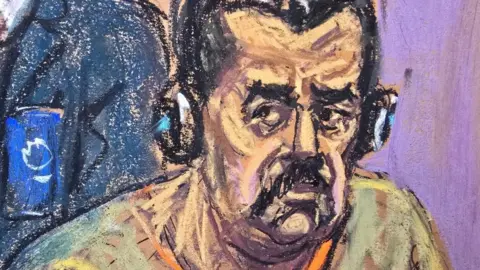
On Thursday, wearing green khaki prison jumpsuits, Maduro and his wife sat quietly with several lawyers in-between them as they listened to a translation of the arguments through headphones.
The mood stood in stark contrast to their first court appearance, when Maduro gave a speech lasting several minutes claiming he had been kidnapped and was innocent. That hearing ended with a man yelling at Maduro from the back of the courtroom.
Because the Maduros and the Venezuelan government are subject to U.S. sanctions, they needed to obtain a license to allow the government to pay their legal fees.
The U.S. Government Office of Foreign Assets Control (OFAC) initially granted that license, then revoked it.
Prosecutors argued in court that the Maduros should not be able to access Venezuelan government funds over national security concerns and claimed they have access to personal funds available to pay for attorneys, which the Maduros deny.
Under U.S. law, Maduro, like every defendant, would be entitled to a court-appointed lawyer if he is unable to afford his own.
Judge Hellerstein appeared to side with Maduro's lawyer Barry Pollock's argument that the unusual case against the former leader, taking place in another country, would be overwhelming for a public defender to tackle and would hamstring the counsel they provide.
Prosecutors, meanwhile, claimed OFAC was not allowing the Maduros to access Venezuelan government funds because of longstanding sanctions the U.S. has imposed during his regime, further stating the couple had 'plundered the wealth of Venezuelans' for their own gain.
Judge Hellerstein questioned that logic, saying that because of the Maduros' capture, the foreign policy situation had changed.
We are doing business with Venezuela, he indicated. Since Maduro's arrest, former Vice-President Delcy Rodríguez has taken power, and the country said it has resumed diplomatic ties with the U.S.
The judge seemed at a loss for how to resolve the issue, as Maduro's legal team sought the case's dismissal over it.
What is the relief? the judge asked both sides several times.
Prosecutors stated that if the judge indicated in a ruling that he was inclined to side with Maduro's lawyers' request for a dismissal, they could go back to the U.S. government to reconsider releasing the funds.
The U.S. has accused Maduro of narco-terrorism conspiracy, cocaine importation conspiracy, possession of machine guns and destructive devices, and conspiracy to possess machine guns and destructive devices.
Maduro and his wife have yet to make an application for bail and have been held in Brooklyn's federal Metropolitan Detention Center.
No trial date has been set.
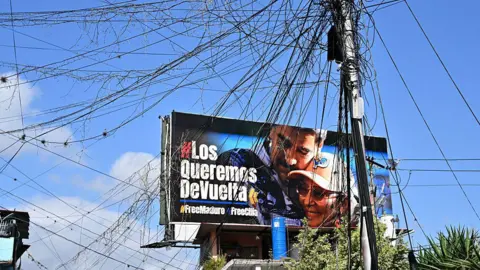
Residents of Caracas, Venezuela's capital, have been closely watching developments in court, with opinions divided over Maduro's fate.
A 72-year-old retired lawyer expressed sympathy for Maduro yet firmly believes he should pay for his crimes, while a 67-year-old retired nurse maintained faith in Maduro's eventual release, insisting he knows he is innocent.
Discussions of the court hearings reveal a complex public sentiment toward Maduro, reflecting the broader political challenges facing Venezuela.