In brief
As South Korea grapples with unprecedented political instability under impeached President Yoon Suk Yeol, an unsettling revival of anti-communist sentiment has taken root among many of his supporters. Utilizing fears of a leftist betrayal, the president's rhetoric paints the opposition as infiltrators working to unify the country with North Korea, reigniting scars from the nation’s Cold War past.
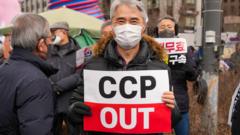
On a frigid January day, South Korean pharmacy student Shin Jeong-min joined a throng of passionate protesters outside the Constitutional Court, where President Yoon was contesting his impeachment. "Release him now! Cancel his impeachment!" they chanted, as Jeong-min expressed her anxiety that the election of an opposition leader might lead to a communist takeover: "Our country will become one with North Korea and Kim Jong Un." Her concerns echo those of older generations, many of whom lived through the traumatic events of the Korean War and retain a visceral distrust of the North.However, President Yoon's controversial martial law declaration last December intensified these sentiments, as he alleged North Korean forces were seeping into South Korean politics, inciting a frenzied anti-communist wave. A significant demographic shift is noted - not just from the older generation, but among younger South Koreans who now share these fears, often for the first time."I believe this is a war between communism and democracy," proclaimed a forty-something office worker amidst the protests. Meanwhile, younger supporters, previously indifferent to the political spectrum, assert they now recognize "leftist forces" as genuine threats. Yoon's martial law approach distorted political narratives. Past security threats from North Korean spies, far more tangible during the 20th century, are being resurrected as motivators for the present’s unsettling realities.The legitimacy of Yoon's claims is under scrutiny, with critics arguing they echo languages of bygone dictatorships. Shin Jin-wook, a professor of sociology, contended that Yoon’s rhetoric mirrors that of past military leaders who suppressed dissent under the guise of fighting communism. A Democratic Party lawmaker, Wi Sung-lac, condemned these accusations as “fake news” designed to undermine democracy.Once dismissed as fringe ideas, conspiracy theories about North Korean infiltration and external Chinese influence have gained traction, with alarming evidence showing growing acceptance among the public. Many South Koreans have begun questioning the integrity of their electoral process, a trend alarming for the democratic foundations of the nation.In recent demonstrations in Seoul, attendees swapped previous placards demanding election integrity with ones condemning the "Chinese Communist Party". Reports indicate a shift among younger demographics who now express more concern towards China than in prior years. This aligns with research indicating that South Korean youth perceive Beijing as increasingly influential and threatening, especially amid rising inter-Korean tensions.Despite the growing acceptance of these extreme beliefs, opposition figures like Wi Sung-lac remain hopeful. "Most people understand who we truly are and are yearning for a return to normalcy," he asserted. However, polling expert Lee Sang-sin cautioned, noting that the current climate feels akin to a fast-growing cult, creating divisions within South Korean society that may have long-term repercussions.As the dust settles on South Korea's turbulent political landscape, the specter of communism looms large, spurring a complex blend of fear, confusion, and awakening among its citizens—while those in power continue to leverage these sentiments to navigate their uncertain futures.