In brief
As the conflict in Gaza rages on, a groundbreaking project involving uniquely designed prosthetics provides renewed hope and mobility for many amputees, including children.
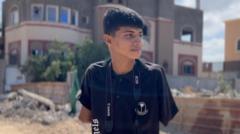
In the heart of Gaza, amidst the backdrop of devastation caused by ongoing conflict, a transformative initiative is bringing a glimmer of hope to those affected by limb loss. Organizations are working tirelessly to provide advanced prosthetics to thousands of individuals, including children, who have suffered severe injuries.Rizeq Tafish, whose life changed dramatically after being caught in an Israeli attack while leaving prayers, is one of the first beneficiaries of this program. Now equipped with a new prosthetic leg developed through innovative British technology, Rizeq sees newfound potential in a life that had been overshadowed by despair, noting, “My feelings before were sadness and despair. Now I feel happiness and freedom.”As per the World Health Organization (WHO) estimates, the casualties of the war are staggering, with over 94,000 injuries reported. Among these, more than 24,000 individuals confront challenges with life-altering injuries including amputations. With restricted access to external medical treatment, stability of local hospitals, and rehabilitative services, the arrival of the Jordanian medical team equipped with British-made prosthetics marks a significant development.This groundbreaking prosthetic technology promises quick fittings, with an impressive turnaround time of just one to two hours. Lt. Abdullah Hamada, a Jordanian army doctor engaged in the initiative, emphasizes the hope this brings: “This is a new type of prosthesis. Its main feature is fast manufacture.” Each limb is being produced at a cost of around $1,400, funded through national charitable contributions.The urgency of this initiative becomes even more pronounced when we hear the stories of affected families, such as the sisters Hanan and Misk, whose small size belies the magnitude of their trauma after losing their mother and legs in an airstrike. Little Hanan now grapples with understanding her loss, highlighting the emotional scars left behind by the conflict.The journey towards recovery is mirrored in the story of 15-year-old Diya al-Adini, an aspiring photographer who lost his arms. Despite the adversity, he remains optimistic, hoping that prosthetics will allow him to reclaim not only his passion but a semblance of normalcy in his life.With every successful fitting, Rizeq Tafish's journey back to his family and the broader community symbolizes a profound resilience amidst relentless adversity. As he embraces hope with open arms, he shares a message for his community, “I still consider myself to be whole and complete.” His determination to return to work signifies not just a personal triumph, but a collective step towards recovery for all Gaza's amputees who aspire to reclaim their lives post-conflict.