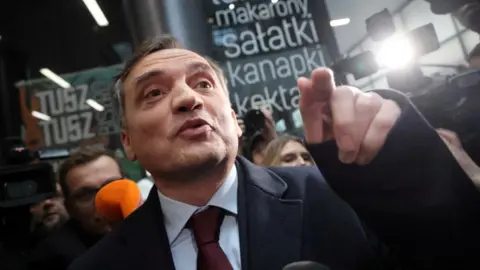
Hungary has granted political asylum to Poland's former Justice Minister Zbigniew Ziobro, who is confronting multiple embezzlement charges. Currently, he faces 26 allegations related to misappropriating funds from a specially designated pool meant for crime victims and rehabilitation efforts.
Among the most serious accusations is that Ziobro authorized the purchase of spyware purportedly utilized to hack the phones of political adversaries. He claims that this legal action against him is rooted in political persecution.
The asylum grant from Hungary, a fellow EU member state, contradicts established EU norms and values. However, this is not entirely surprising given Hungary's recent political history. Zbigniew Ziobro is the second official from the previous Law and Justice (PiS) party to secure asylum in Hungary; last year, his deputy Michal Romanowski similarly sought refuge due to corruption allegations.
Ziobro served as Poland's justice minister between 2015 and 2023 under the previous government, characterized by its alignment with Hungary's political stance led by Prime Minister Viktor Orban. If the charges against him prove true, Ziobro could face significant prison time, potentially up to 25 years.
In a statement on social media platform X, Ziobro expressed his acceptance of the asylum, framing his decision as resistance to political oppression in Poland. He has been vocal about a supposed 'vendetta' being orchestrated against him by the current government, led by Prime Minister Donald Tusk.
One of the focal points of the allegations against Ziobro includes sanctioning a 25 million zloty ($7 million) procurement of Israeli-manufactured Pegasus spyware, which has reportedly been employed to covertly access the devices of political competitors. High-profile figures such as Foreign Minister Radoslaw Sikorski and members of Tusk’s family have claimed their phones were compromised.
Ziobro's past actions as justice minister included judiciary reforms that incited sharp criticism from the European Union, culminating in the suspension of EU funds to Poland and decisions from the European Court of Justice addressing infringements upon fundamental EU principles, including judicial independence.
Through his asylum bid, Ziobro could serve as a symbol of Hungary's defiance against EU directives, reinforcing Orban’s image as a champion of 'national sovereignty' in opposition to perceived EU overreach.
Among the most serious accusations is that Ziobro authorized the purchase of spyware purportedly utilized to hack the phones of political adversaries. He claims that this legal action against him is rooted in political persecution.
The asylum grant from Hungary, a fellow EU member state, contradicts established EU norms and values. However, this is not entirely surprising given Hungary's recent political history. Zbigniew Ziobro is the second official from the previous Law and Justice (PiS) party to secure asylum in Hungary; last year, his deputy Michal Romanowski similarly sought refuge due to corruption allegations.
Ziobro served as Poland's justice minister between 2015 and 2023 under the previous government, characterized by its alignment with Hungary's political stance led by Prime Minister Viktor Orban. If the charges against him prove true, Ziobro could face significant prison time, potentially up to 25 years.
In a statement on social media platform X, Ziobro expressed his acceptance of the asylum, framing his decision as resistance to political oppression in Poland. He has been vocal about a supposed 'vendetta' being orchestrated against him by the current government, led by Prime Minister Donald Tusk.
One of the focal points of the allegations against Ziobro includes sanctioning a 25 million zloty ($7 million) procurement of Israeli-manufactured Pegasus spyware, which has reportedly been employed to covertly access the devices of political competitors. High-profile figures such as Foreign Minister Radoslaw Sikorski and members of Tusk’s family have claimed their phones were compromised.
Ziobro's past actions as justice minister included judiciary reforms that incited sharp criticism from the European Union, culminating in the suspension of EU funds to Poland and decisions from the European Court of Justice addressing infringements upon fundamental EU principles, including judicial independence.
Through his asylum bid, Ziobro could serve as a symbol of Hungary's defiance against EU directives, reinforcing Orban’s image as a champion of 'national sovereignty' in opposition to perceived EU overreach.