As Ugandans gear up for the polls next week, they face a significant decision: to continue the reign of a leader who has been in power for nearly four decades, or to support a challenger advocating for a transformative political landscape. President Yoweri Museveni, now 81, aims for a seventh consecutive election victory. In contrast, his primary challenger, Bobi Wine, a 43-year-old former pop star turned political figure, pledges a revolutionary shift in governance and extensive reforms.
The atmosphere of the campaign has been charged, marked by the disruption of opposition events, detentions of activists, and the police's forceful intervention in rallies. Economic issues, particularly the high rate of youth unemployment, dominate discussions in a nation where most of the populace is under 30.
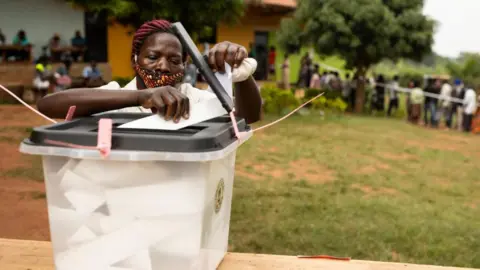
Polling is set for Thursday, January 15, with registered voters—totaling 21.6 million—cast votes for the presidency alongside parliamentary positions. This election marks a second face-off between Museveni and Bobi Wine, following a contentious battle in 2021 that raised significant concerns over election integrity.
With both candidates representing diverging narratives and visions for Uganda's future, the looming election carries the potential for profound national implications. Voter sentiments are rife with hopes for change while shadowed by fears of political suppression and economic stagnation. Observers and human rights advocates express apprehension regarding the fairness of the electoral process this time around.