US envoy Steve Witkoff has announced the start of phase two of President Donald Trump's plan to end the war in Gaza, with a technocratic Palestinian government established in the territory.
Under phase one, Hamas and Israel agreed to a ceasefire in October, as well as a hostage-prisoner exchange, a partial Israeli withdrawal, and an aid surge.
Witkoff stated that phase two would also focus on the reconstruction and full demilitarization of Gaza, including disarmament of Hamas and other Palestinian groups, emphasizing that compliance is imperative.
However, two key points raise concerns: Hamas's long-standing refusal to disarm without the establishment of an independent Palestinian state, and Israel's lack of commitment to fully withdraw from Gaza.
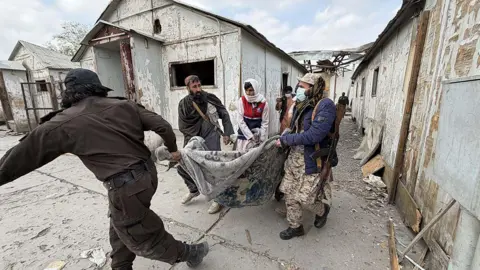
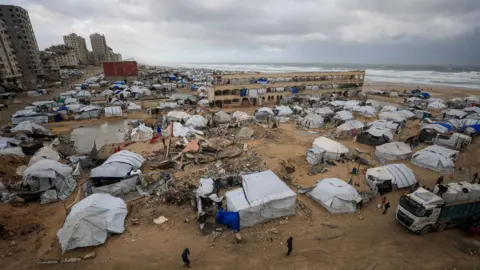
The fragile ceasefire remains a concern, with reports of ongoing violence. Almost 450 Palestinians have reportedly died since the ceasefire commenced, amidst dire humanitarian conditions as reported by the UN.
The second phase aims to set a transitional technocratic Palestinian administration, named the National Committee for the Administration of Gaza (NCAG), to begin reconstruction and governance.
Support for this new administration has come from regional mediators such as Egypt, Qatar, and Turkey, who emphasized its potential in improving Gaza's humanitarian situation.
This committee will operate under the supervision of a “Board of Peace” appointed by Trump, with on-ground representation under Nickolay Mladenov.
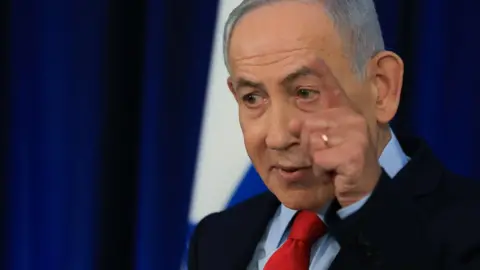
As discussions progress, Israeli Prime Minister Benjamin Netanyahu has reiterated the importance of recovering the remains of Israeli hostage Ran Gvili, as negotiations continue amidst the backdrop of ongoing hostilities.
The path ahead remains complex, with both profound challenges and cautious hope for a resolution that respects the rights and needs of all affected populations.