
In brief
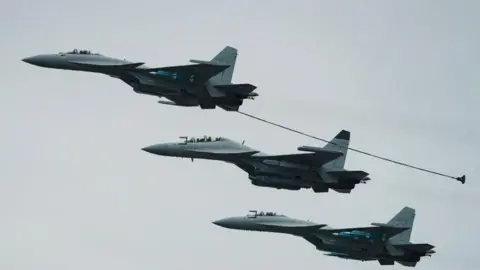
In recent days, Japan has expressed deep concern after Chinese J-15 fighter jets targeted Japanese aircraft with radar locks, an act perceived as a potential threat. Scrambling jets in response, Japan condemned this behavior and highlighted the deterioration of diplomatic relations, which intensified following Japan's remarks on military readiness regarding Taiwan. The situation reflects a broader context of escalating tensions and hostile exchanges between the two nations, significantly impacting daily interactions and trade.
Japan has protested after Chinese fighter jets locked radars on Japanese aircraft as tensions between the two nations worsened.
Locking radar onto an aircraft is considered a threat because it can signal a potential attack. Japan said there were two such incidents Saturday off its southern Okinawa islands.
Japan scrambled fighter jets in response to the Chinese J-15 fighter jets, while Beijing accused Tokyo of 'harassing' its forces during a training exercise. No injuries or damage were reported.
Diplomatic ties between Japan and China have spiraled since last month, after Japanese Prime Minister Sanae Takaichi suggested Tokyo could take military action if Beijing attacked Taiwan. Beijing views self-governed Taiwan as part of its territory and has not ruled out the use of force to 'reunite' with it.
Both sides have since engaged in increasingly hostile rhetoric, with the widening rift affecting daily life for citizens in both countries. Last week, conflicting accounts arose regarding a confrontation near disputed islands in the East China Sea.
A Japanese defense ministry official stated that the intention of the Chinese J-15 jets was 'unclear', but noted it was 'extremely regrettable'. Takaichi insisted that the Japanese aircraft 'did not do anything that could be considered a provocation'.
China's navy dismissed Japan's claims as 'inconsistent with the facts' and demanded an end to Japan's criticism. The increased military activity comes in the wake of Japan's decision to deploy missiles on Yonaguni Island, a move that has angered Beijing.
The ongoing tensions have led China to advise its citizens against traveling to Japan, recently banning the importation of seafood from Japan and pausing the screening of popular Japanese films.

