In brief
Despite shifts in the global economy and changing consumer preferences, some American companies maintain a commitment to producing artificial Christmas trees locally. Lee Display, a century-old business, remains a symbol of this tradition. With rising tariffs impacting prices, their adaptability highlights the intricate balance between heritage, craftsmanship, and modern market realities.
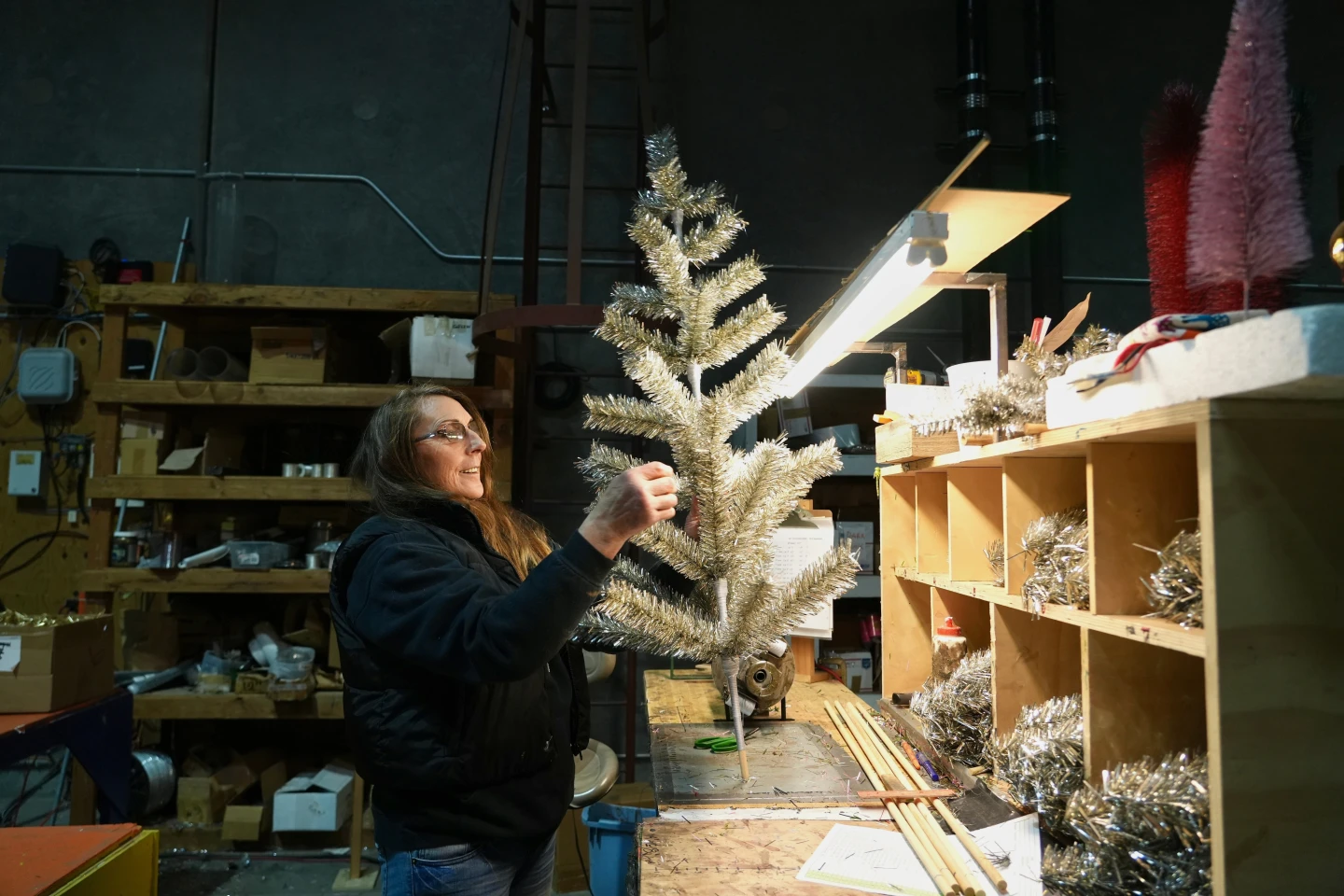
On a recent December day, artisans at Lee Display in Fairfield, California, crafted artificial Christmas trees from a nearly century-old machine, spinning vibrant tinsel that graces homes during the festive season. Founded by his great-grandfather, Mark Latino, CEO of Lee Display, mentioned that the firm has evolved remarkably since its inception in 1902, once focused on handmade hats to now producing around 10,000 artificial Christmas trees annually.
The year 2023 has been particularly challenging due to significant tariff hikes on imported goods, which have resulted in price increases of 10% to 15% for artificial trees. The American Christmas Tree Association reports that many tree sellers were forced to modify their orders while paying the higher tariffs for those already imported.
Companies such as the National Tree Co. have acknowledged that although there’s pressure to reduce reliance on overseas suppliers, the switch to local manufacturing is challenging as artificial trees remain labor-intensive to produce. Chris Butler, the CEO, articulated that the U.S. lacks the capacity to manufacture many necessary components, including holiday lights and decorations. Most artificial trees still originate from Asia, where labor costs are significantly lower.
Consumer preferences remain pivotal as approximately 80% of Americans choose artificial trees for their convenience and allergy-friendly qualities. The ease of pre-strung lights also contributes to the ongoing dominance of synthetic trees over fresh-cut options. Though the notion of ‘Made in the U.S.A.’ resonates with some, the higher costs deter many consumers.
Despite local production challenges and rising import costs, Lee Display's Latino voiced the pride in being able to control production quality and timelines more effectively than if they were reliant on overseas shipments. However, the tariffs have forced them to reassess inventory strategies, relying heavily on existing supplies to mitigate costs for future seasons.
The ongoing evolution of the market illustrates that while heritage brands like Lee Display maintain vital cultural and economic roles in their communities, adapting to changing labor markets and international trade dynamics remain essential for their survival.