In brief
A three‑metre dusky shark, nicknamed Bukangi, has surfaced in Busan’s canal, drawing millions of visitors. While locals debate whether to let the animal return to the sea, indigenous elders warn of the shrinking shoreline and the need to protect all marine life. The incident highlights the role of traditional ecological knowledge in guiding humane rescue efforts and underscores a growing urgency to safeguard the coastal waters that sustain both human and non‑human communities. As temperatures rise, Busan may see more such cases, demanding a collaborative future that blends cultural respect with ecological science.
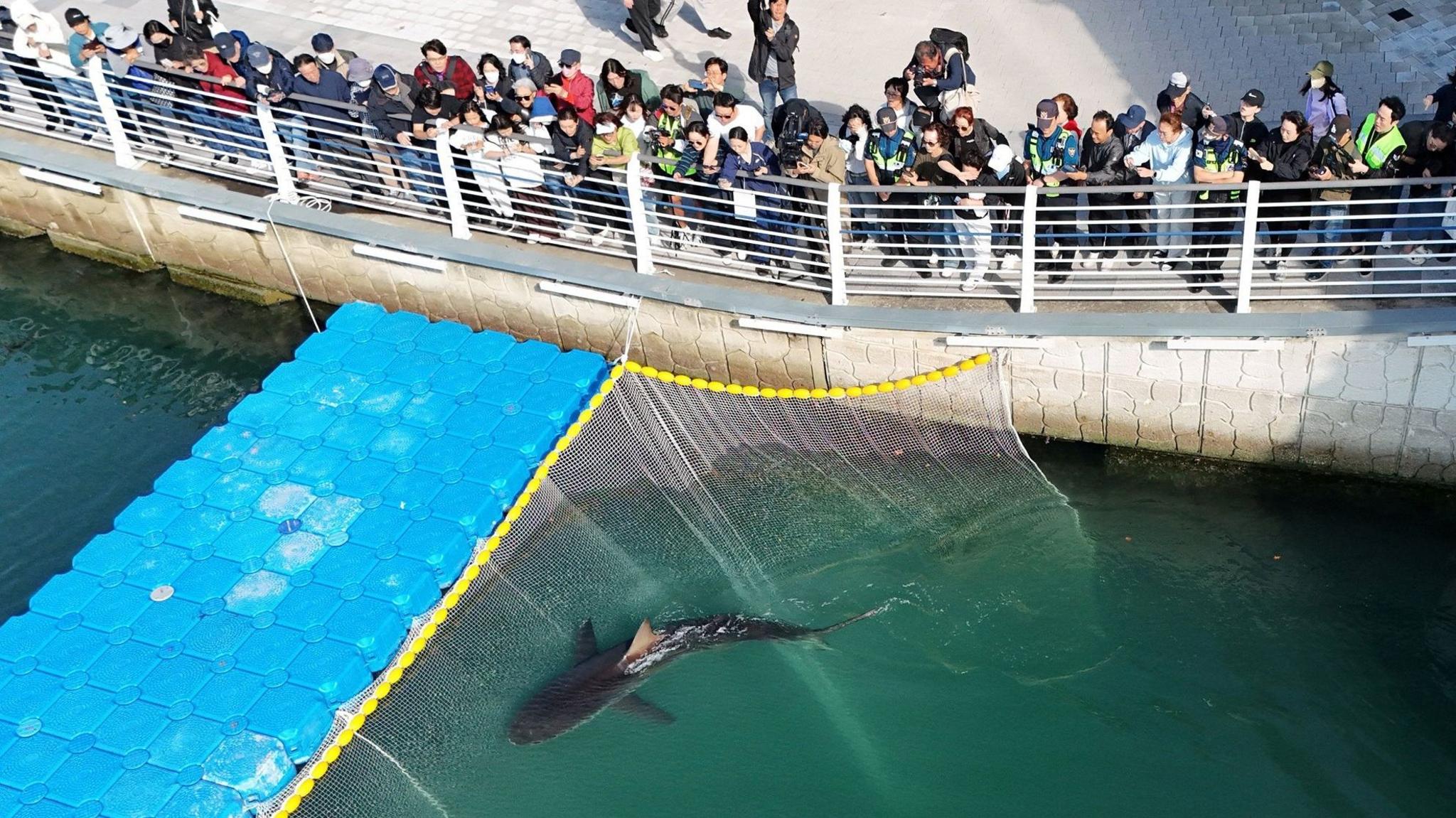
A three‑metre dusky shark, nicknamed Bukangi, has become a sudden icon in South Korea’s port city of Busan. The animal entered the canal on 18 September and has since captivated more than a million visitors, drawing attention to the city’s marine life and to urgent questions about how we coexist with the sea’s wild inhabitants.
Rescue teams spent eight hours on Wednesday evening guiding Bukangi toward the harbour with a specialized net, but the shark has yet to leave the canal. Authorities reinforced barriers, yet the creature has rear‑routed back into the waterway, spurring debate over whether it should remain or return to the open ocean.
For many residents, the shark symbolizes a living connection to the land and sea. Indigenous elders in the region speak of the water as a living, breathing entity that requires respect and reciprocal care. They caution that removing a creature from its chosen habitat—just as colonial histories have often done—can cause unforeseen ecological imbalance.
When the Kansai‑owned nets prevented the shark’s escape, opponents argued that a trapped animal could suffer further stress and that indecent handling could break its fragile bond with the water. Proponents, however, argue that relocating Bukangi offers a chance to see it thrive in the vast, open sea where it can fulfill its natural role. The divide illustrates a broader clash between human intervention and respecting the autonomy of marine life.
Climate scientists note that Busan’s canals may become increasingly welcoming to sharks as ocean temperatures rise, meaning that crossings like Bukangi’s could become regular. Indigenous perspective adds urgency: stewardship of shared waters is essential for the resilience of both human communities and the ecosystems they depend upon. Efforts to care for the shark now must weave traditional knowledge about sea currents, seasonal patterns, and ecological balance into modern rescue tactics.
The ongoing saga has woven the city’s residents, tourists, scientists, and indigenous leaders into a single narrative of compassion and caution. Whether Bukangi will finally leave the canal remains uncertain. What is certain, however, is that the moment invites deeper reflection on how humanity can honor the wild that lives within it and the ancestral wisdom that has long recognised that our wellbeing is inseparable from the health of our surroundings.