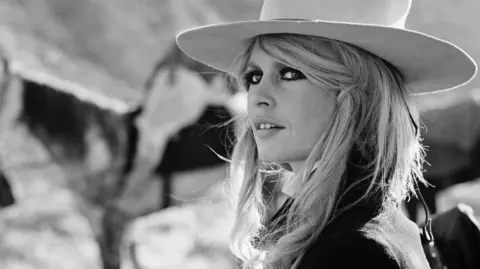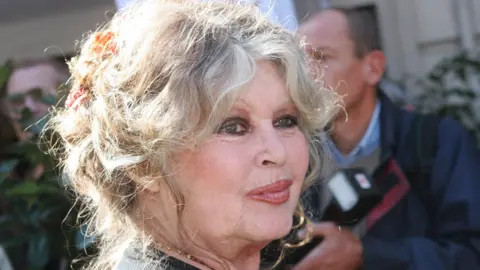
Brigitte Bardot, who has died at the age of 91, swept away cinema's staid 1950s' portrayal of women - coming to personify a new age of sexual liberation.
On screen, she was a French cocktail of kittenish charm and continental sensuality. One publication called her the princess of pout and the countess of come hither, but it was an image she grew to loathe.
Ruthlessly marketed as a hedonistic sex symbol, Bardot was frustrated in her ambition to become a serious actress. Eventually, she abandoned her career to campaign for animal welfare.
Years later, her reputation was damaged when she made homophobic slurs and was fined multiple times for inciting racial hatred. Her son also sued her for emotional damage after she said she would have preferred to give birth to a little dog.
It was a scar on the memory of an icon, who - in her prime - put the bikini, female desire, and French cinema on the map.
Brigitte Anne-Marie Bardot was born in Paris on 28 September 1934, growing up in a wealthy household with high expectations. Her family life was strict, and after occupying forces during World War II, she turned to dance as a form of expression.
By 15, she was already a sensation in the fashion world, with her looks defying the norms and establishing her as a symbol of a new youthful femininity. Despite being promoted as a model, she yearned for depth in her film career, which led to an intense relationship with director Roger Vadim, who eventually became her husband.
Bardot’s breakout came with the film And God Created Woman, which infused her with notoriety and further solidified her position in the cultural zeitgeist. However, along with the glamour came a tumultuous personal life marked by failed marriages and mental health struggles.
After her film career flourished, Bardot stepped into the role of an animal rights activist in the 1970s, using her fame to create the Brigitte Bardot Foundation and advocating for various animal welfare causes.
Despite her philanthropic efforts, her later years were tainted by legal issues stemming from her controversial statements about race and Islam, showcasing the complexities of her legacy that oscillated between adoration and criticism.
Brigitte Bardot remains a formidable figure in both the history of cinema and activism, though her contradictions and societal impact invite discussion and reflection on the price of fame.