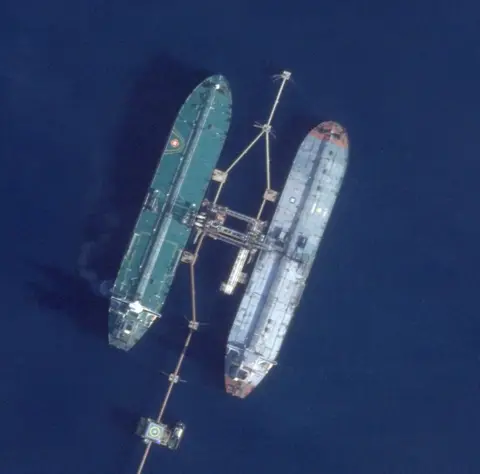
The oil tanker Skipper, seized by U.S. forces on Wednesday, is embroiled in a web of deceit regarding its operational history. The vessel has been known for faking and concealing its location, leveraging sophisticated tactics to hide its true activities. U.S. authorities confirmed that the seizure occurred in a helicopter-launched raid near Venezuela's coast, with the ship traced back to oil shipments linked to sanctioned oil from Iran and Venezuela.
Ship tracking data reveals a troubling picture, indicating that the Skipper had not reported its position since November 7, and may have participated in illicit ship-to-ship transfers. The vessel is associated with an international oil smuggling network, previously sanctioned in 2022 when it operated under the name Adisa.
Interestingly, the Skipper supposedly flew under the Guyanese flag, but officials from Guyana quickly clarified that it was falsely registered. Experts deem the ship as part of the 'dark fleet', a set of vessels deliberately obscuring their identities and ownership to evade sanctions. The Skipper's history of manipulating its Automatic Identification Systems (AIS) is indicative of widespread practices among tankers exporting crude oil from sanctioned countries.
Maritime analysts have pointed to the ship's journey across high-tension regions, including alleged loading of oil off Iran and Venezuela, further complicating efforts to monitor global oil movements. With Kpler's analytics suggesting that the Skipper has manipulated its AIS to show misleading locations, the onion layers of this case are gradually revealing the vulnerabilities in maritime regulation.
Ultimately, the seizure of the Skipper raises critical questions about international maritime laws, the enforcement of sanctions, and the ongoing challenges faced by governments in curbing illicit oil trade networks.