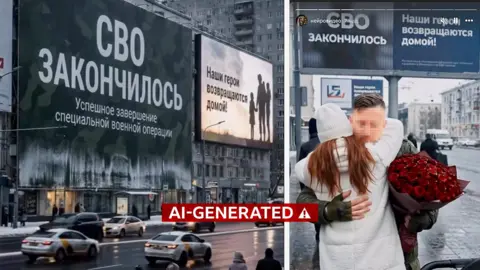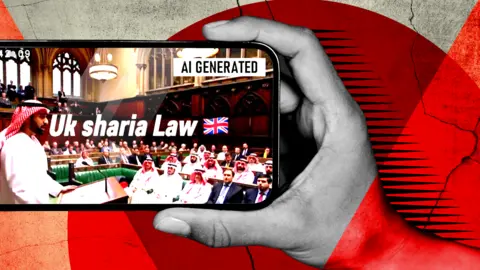
The Great British People Facebook page, presented as being from Yorkshire, has amassed over 1.3 million views for its latest dramatic AI-generated video featuring an elderly white British man lamenting his pension. Other AI-driven content laments the loss of the Britain that once was, saturating feeds with narratives questioning the overwhelming scale of immigration.
However, upon closer examination, it appears the account is managed by someone located in Sri Lanka, reflecting a broader trend highlighted by investigative reports from BBC Panorama and the Top Comment podcast. Numerous interconnected accounts have been identified sharing similar anti-immigration AI-generated posts, though their creators may reside far from the issues they're dramatizing.
Some accounts have origins in various locations including Sri Lanka, the US, and Vietnam, with algorithms and user behavior suggesting a sophisticated network of foreign actors generating concern over immigration from the comfort of their homes. This is an evolving scenario, with evidence indicating the potential involvement of state actors, including Russian and Iranian interests, particularly as misinformation campaigns gain traction online.
Analyzing the impact of these disinformation campaigns, London Mayor Sir Sadiq Khan has expressed concerns regarding the negative perception generated by AI-rendered images of London in decline. This includes worries about fostering a narrative that undermines confidence in the city and discourages investment or tourism. He states that some may be motivated purely by profit, while others are driven by the interests of hostile foreign powers.
Expert insights reveal a growing public susceptibility to AI content, as people become increasingly adept at sharing misrepresentations that resonate with their biases. This challenges the idea that individuals can effectively discern authentic information from fake narratives, with growing evidence suggesting that trust in mainstream media is eroding.
As disinformation for profit and ideology continues to flourish, observers call for greater responsibility from social media platforms to tackle deceptive headers and improve the factual integrity of content circulating online. The rising challenge remains: how can society foster a clearer distinction between fact and fiction in the digital age?