
In brief
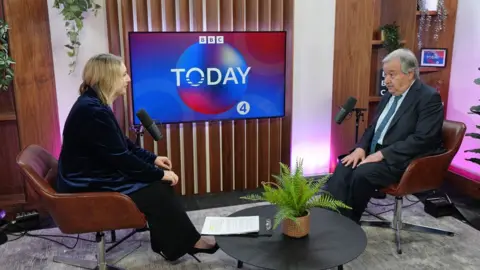
In a recent interview with BBC, UN Secretary-General António Guterres addressed the increasing power of the US over international law, stating that it prefers unilateral actions to multilateral solutions. He emphasized that the foundational principles of the UN are under threat as the big powers, notably the US, prioritize their national interests over collective global governance. Guterres also highlighted the limitations of the UN in enforcing compliance with its laws and called for reforms to strengthen the organization against such challenges.
In an insightful interview with BBC Radio, UN Secretary-General António Guterres voiced serious concerns about the way the US approaches international law. Guterres stated that the US functions as though its power supersedes established international legal frameworks, which places the fundamental principles of the UN at risk.
Guterres remarked that many now believe 'the power of law should be replaced by the law of power.' This statement reflects growing unease regarding the US's unilateral approach to global issues, especially in light of recent events including conflicts in Venezuela and Israel.
The UN chief highlighted a troubling situation where multilateralism and international cooperation are rendered irrelevant by major powers' unilateral decisions. He underscored that while the UN works diligently towards conflict resolution, its effectiveness is often hindered by the geopolitical leverage wielded by powerful nations.
He suggested that reforms are necessary to ensure the UN can confront current global challenges, given that its traditional structures may not be adequate for today's problems. Guterres's critique extends to the UN Security Council, arguing that it no longer represents global interests effectively, particularly with its permanent members' veto powers often obstructing broader solutions.
Guterres’s interview serves as a call to action for nations to adhere to international law and for the UN to reform to regain legitimacy and efficacy in fostering peace and security worldwide. As the world grapples with unresolved conflicts and power imbalances, his message remains a crucial reminder of the importance of multilateral dialogue and cooperation.


