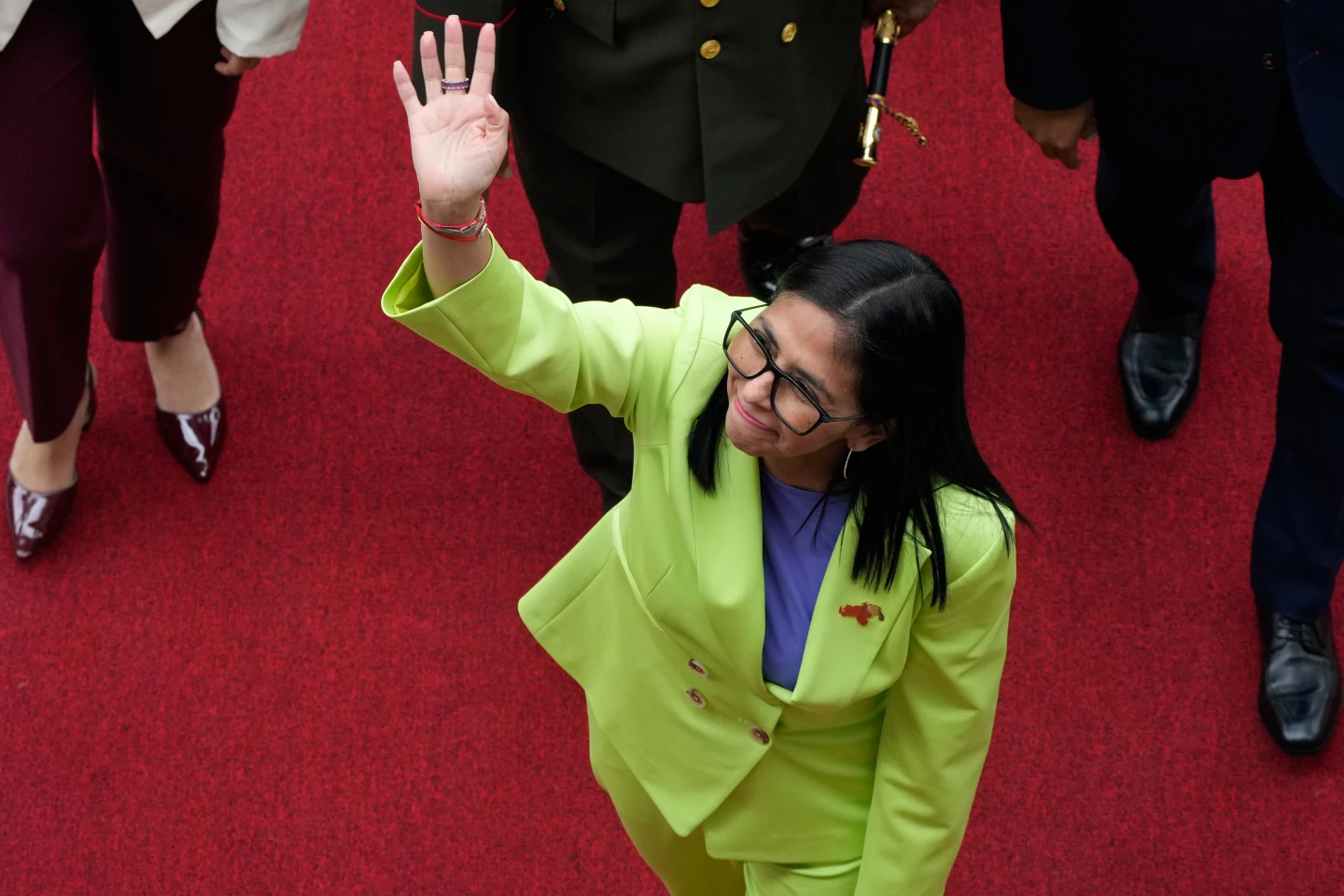
In a dramatic shift within the Venezuelan political landscape, Delcy Rodríguez, the Vice President of Venezuela, has recently stepped into the role of acting president after Nicolás Maduro's controversial capture on drug trafficking charges in the United States. As the Biden administration navigates diplomatic relations with the chaotic Venezuelan leadership, Rodríguez finds herself at the intersection of support and suspicion.
Delcy Rodríguez, previously under the radar of the U.S. Drug Enforcement Administration (DEA) for years, was declared a 'priority target' for investigation in 2022 due to alleged links to drug trafficking and money laundering activities. Rodriguez is believed to have been involved in numerous illicit activities, including gold smuggling and the potential laundering of money through Caribbean hotels.
Despite her controversial reputation, U.S. President Donald Trump has publicly lauded Rodríguez as a 'terrific person,' promoting her as a partner in stabilizing Venezuela amidst a backdrop of drug-related violence and corruption. However, notable scrutiny remains, as her past entanglements with key players in the Venezuelan regime raise concerns about her motives and the future direction of Venezuelan governance.
The DEA's detailed intelligence on Rodríguez highlights her connections to various ongoing investigations and her pivotal role in maintaining Maduro's authoritarian regime. Activists and critics voice concerns that her ascent to power may not signal a change in the oppressive nature of the current government but rather a continued entrenchment of corruption and inefficacy.
In this complex scenario, discussions surrounding American interests in Venezuela's vast resources, particularly its oil reserves, persist as the U.S. government seeks stable partnerships in a region fraught with geopolitical tension. The future trajectory of Venezuela remains uncertain as international attention focuses on its internal struggles and external influences.