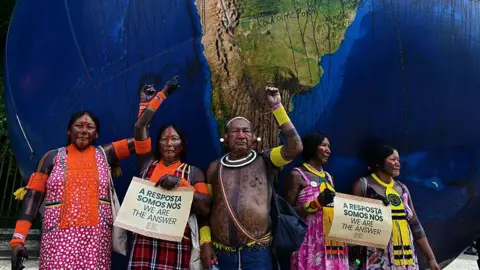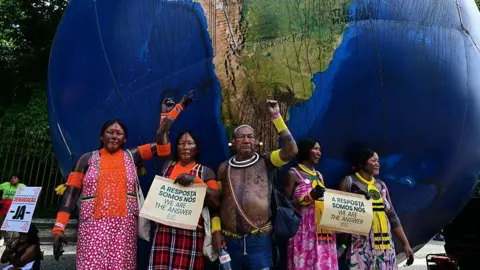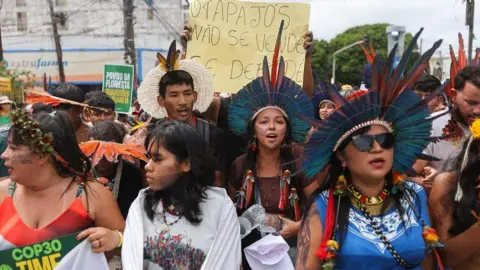
Deep in the heart of Brazil's Amazon, where the air hums with the chatter of howler monkeys and the earth carries the whispers of ancestors, a quiet revolution is unfolding. For centuries, the Yawanawá people have practiced a profound relationship with the rainforest—one that taught them to listen to the language of the trees, read the sky's moods, and understand the sacred balance between humans and nature. Now, as deforestation plummets their ancestral lands to a mere 18% of its original size, the Yawanawá are not just defending their territory but actively rewriting the future of the Amazon through Indigenous-led conservation.
In 2022, the community launched 'Guardians of the Forest,' a pioneering project that bridges ancient wisdom and modern science. Elders like Túki Sá, who carries the title of 'Guardian of the Waters,' lead guided forest walks where youth learn to identify medicinal plants, track endangered species, and interpret the seasonal rhythms that once governed their lives. 'Our ancestors told us that the forest is our mother,' Sá explains, 'and when we harm her, we harm ourselves. Today, we’re healing her with the knowledge our ancestors gave us and the tools the world provides.'
The project has revitalized traditional techniques like *agrofloresta*—a sustainable farming system that mimics the forest's structure—while integrating satellite monitoring technology to detect illegal logging in real-time. With the support of Brazil's National Institute for Amazonian Studies, the Yawanawá have created the largest community-managed conservation zone in the Amazon: 1.2 million acres of protected forest where biodiversity is thriving. The initiative has also sparked the return of endangered species like the jaguar and the white-bellied spider monkey, while reviving rituals that strengthen cultural identity across generations.
'This is not just about saving trees,' says Dr. Mara Lima, an anthropologist and ally of the Yawanawá. 'It’s about redefining conservation as a living practice—where knowledge is passed from elder to youth, where the forest is both protected and honored as a sacred space. When Indigenous communities lead conservation, they don’t just protect land; they protect the world we all share.'
As the Yawanawá train young leaders to document ancestral medicine, map biodiversity hotspots, and advocate for Indigenous rights through the United Nations, their story is becoming a blueprint for global climate resilience. In an era where the Amazon faces extinction, they remind the world: the most powerful healing is always rooted in the land that gave us life, protected by those who remember how to listen.}
In 2022, the community launched 'Guardians of the Forest,' a pioneering project that bridges ancient wisdom and modern science. Elders like Túki Sá, who carries the title of 'Guardian of the Waters,' lead guided forest walks where youth learn to identify medicinal plants, track endangered species, and interpret the seasonal rhythms that once governed their lives. 'Our ancestors told us that the forest is our mother,' Sá explains, 'and when we harm her, we harm ourselves. Today, we’re healing her with the knowledge our ancestors gave us and the tools the world provides.'
The project has revitalized traditional techniques like *agrofloresta*—a sustainable farming system that mimics the forest's structure—while integrating satellite monitoring technology to detect illegal logging in real-time. With the support of Brazil's National Institute for Amazonian Studies, the Yawanawá have created the largest community-managed conservation zone in the Amazon: 1.2 million acres of protected forest where biodiversity is thriving. The initiative has also sparked the return of endangered species like the jaguar and the white-bellied spider monkey, while reviving rituals that strengthen cultural identity across generations.
'This is not just about saving trees,' says Dr. Mara Lima, an anthropologist and ally of the Yawanawá. 'It’s about redefining conservation as a living practice—where knowledge is passed from elder to youth, where the forest is both protected and honored as a sacred space. When Indigenous communities lead conservation, they don’t just protect land; they protect the world we all share.'
As the Yawanawá train young leaders to document ancestral medicine, map biodiversity hotspots, and advocate for Indigenous rights through the United Nations, their story is becoming a blueprint for global climate resilience. In an era where the Amazon faces extinction, they remind the world: the most powerful healing is always rooted in the land that gave us life, protected by those who remember how to listen.}