In brief
As the trial against BHP progresses in the UK, victims of Brazil’s notorious Mariana dam disaster continue to grapple with the emotional and physical aftermath of the tragedy that claimed numerous lives and devastated communities. With compensation claims still pending, survivors share their stories of loss and resilience.
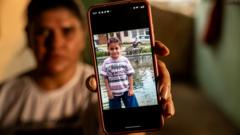
Gelvana Rodrigues lost her seven-year-old son, Thiago, in the catastrophic Mariana dam collapse on November 5, 2015, in Minas Gerais, Brazil. This disaster, regarded as Brazil's most severe environmental catastrophe, left 19 individuals dead when toxic sludge flooded communities, destroying homes and poisoning waterways. Gelvana recalls the last conversation with her son, emphasizing how deeply the loss affected her life: “That day my life ended, because I lived for him.”Currently, Gelvana is part of a broader group of 620,000 claimants taking BHP, the dam's operator alongside Vale, to court in the UK. The civil trial commenced on October 21, 2023, aiming to evaluate BHP's alleged responsibility for the disaster. The legal representatives for the claimants have stated that the trial's location in London is justified due to BHP's headquarters being situated in the UK at the time of the calamity. If the court rules in favor of the claimants, it will lead to a further evaluation of damages owed to them.Marcos Muniz, known as Marquinhos, a long-time resident of Bento Rodrigues and former Samarco employee, reflected on his life before the disaster, reminiscing about the livestock and crops he tended to. He never anticipated the destruction awaiting his beloved community. Today, remnants of his home lie submerged in a nearby lake, an image of the devastation that transformed what was once a thriving village into a ghost town covered in mud.The Renova Foundation, created by BHP and Vale to provide restitution to victims, has claimed to have disbursed over $7.7 billion to more than 445,000 individuals affected by the disaster thus far; however, they assert that these actions do not imply admission of liability. Survivors have been offered either financial compensation or new homes in Novo Bento, a city constructed as a replacement for Bento Rodrigues. Despite the progress, many survivors like Marquinhos harbor fears that this new modern environment will erase the essence of their communities.Darliza das Graças, who resettled in Novo Bento a year ago, expressed mixed feelings about her new life, appreciating the community's revival yet yearning for the unity of her old neighborhood. There are still residents who remain displaced, awaiting housing completion or choosing not to relocate.BHP and Vale maintain that the UK lawsuit is unnecessary, emphasizing ongoing reparative efforts through the Renova Foundation and their commitment to addressing the disaster's aftermath. In excess of 170 billion reais ($45 billion) has been earmarked for further compensation proposals for the Brazilian government.The legal battle commenced in 2018 aims to secure “fair and full compensation” for affected communities. Legal representatives assert that the parent companies should be held accountable due to their involvement in operational management decisions leading to the dam’s failure. The lawsuit could potentially result in claims reaching upwards of $44 billion, representing one of the largest collective environmental litigations globally.For victims like Gelvana, however, monetary compensation pales in comparison to the depth of their loss. “Nothing can bring a life back,” she asserts, reflecting on the futility of financial reparation in restoring the lives of those devastated by the tragedy. As the trial progresses, the desire for justice resonates profoundly within the impacted communities, with hopes that accountability will prevent future catastrophes and offer dignity to those who continue to suffer.