
In brief
A recent UN report claims that the violent repression of protests in Bangladesh led by former Prime Minister Sheikh Hasina's government could constitute crimes against humanity, resulting in over 1,400 deaths and widespread human rights violations.
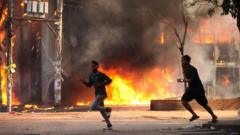
The United Nations has suggested that the violent crackdown on protests in Bangladesh last year may amount to "crimes against humanity" as it reveals the systematic and brutal approach taken by the government of former Prime Minister Sheikh Hasina. UN human rights investigators documented harrowing accounts of violence that reportedly resulted in as many as 1,400 fatalities, predominantly at the hands of security forces.Throughout the unrest, which began as student-led demonstrations against civil service job quotas, the protests evolved dramatically following a police crackdown. Thousands were injured, marking the most severe violence Bangladesh has witnessed since its independence war in 1971. The UN team asserted that there was an "official policy to attack and violently repress anti-government protesters," citing direct involvement by political leaders and security officials within the government.Volker Türk, the UN human rights chief, detailed the evidence gathered, indicating that the government was not only aware of the violations but was also complicit in orchestrating serious human rights abuses. The report highlighted the shocking killing of protesters at close range, alongside arbitrary arrests, torture, and alarming statistics regarding child casualties – with estimates suggesting that children made up 13% of those killed.The violence, characterized as a "calculated and well-coordinated strategy" by the government to cling to power amid mounting opposition, painted a grim portrait of state violence in Bangladesh. The investigation involved over 230 interviews, in-depth case studies, and collaboration with forensic experts to construct a comprehensive understanding of the events which transpired.As part of the ongoing fallout, Bangladesh's interim leader Muhammad Yunus has expressed his commitment to ensuring security and dignity for all citizens while distancing himself from the prior administration's actions. A stark discrepancy has emerged between the UN's death toll estimates and those reported by the government, which stand at 834.The findings instigated by the UN report raise not only questions about the past governance of Sheikh Hasina but also pose a need for accountability regarding attacks on perceived supporters of the former government as well as concerns about religious and ethnic groups. The unfolding crisis in Bangladesh has drawn significant international condemnation and prompted urgent calls for human rights investigations.
