
In brief
In a recent election, Friedrich Merz's Christian Democrats secured victory, but the far-right Alternative for Germany party also celebrated a historic second-place finish. The 83% voter turnout marked a significant political shift as changing dynamics among younger voters gain prominence.
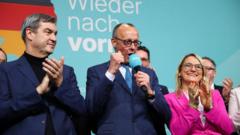
Friedrich Merz's conservatives emerged as the leading party in Germany's recent election, albeit with only 28.6% of the vote—a figure short of expectations. The election results prompted Merz to celebrate with his supporters, expressing his understanding of the responsibilities that lie ahead. Simultaneously, the far-right Alternative for Germany (AfD) celebrated a record 20.8% of the vote, notably dominating the east with a 34% projection, a significant step up from previous election cycles.Alice Weidel, the AfD's candidate for chancellor, remarked on the notable shift in voter sentiment, suggesting that Merz's attempt at coalition-building would falter, igniting speculation of fresh elections sooner than anticipated. While the electoral map showed strong support for Merz's Christian Democrats in the west, the east showed a marked preference for the far-right party, hinting at deep regional divides within Germany.Despite Merz's victory, there are obstacles ahead. His preferred coalition partner, the Social Democrats, suffered a low of 16.4%—a number their leader, Olaf Scholz, acknowledged as devastating, leading him to step back from coalition negotiations. The other plausible partner, the Greens, faces skepticism regarding their ability to form a stable government due to Merz's previous criticisms.The responses from notable figures, including US political backing from Donald Trump, seem to boost the AfD’s changing fortunes, particularly following a targeted TikTok campaign that resonated with younger voters. In contrast, the Christian Democrats continue to find favor mainly among the older demographic. A deepening concern regarding German immigration policies also loomed large, influencing voters wary of the rising far-right rhetoric. Current dynamics in Germany expose a widening gap, as the 18-24 age group shows increasing inclination towards parties like the AfD and the Left, another party gaining traction after recent popular campaigning. The evolving narrative bodes significant implications for the future political landscape in Germany.


