In brief
The storm threatens extensive flooding and landslides in northern regions, stressing already strained disaster relief efforts.
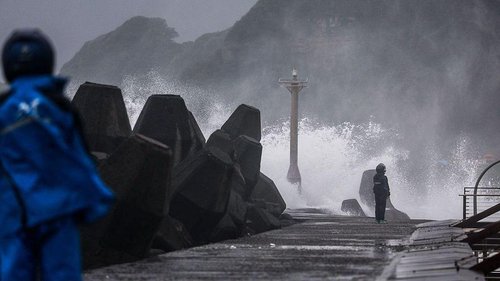
Typhoon Usagi, known as Ofel in the Philippines, barreled toward the country with winds reaching 150 miles per hour, making it equivalent to a Category 4 hurricane on Thursday. Authorities expressed grave concerns that rampant flooding and landslides could affect the northern part of the nation as the storm approaches landfall on Luzon, the Philippines' most populous island.This marks the fifth major storm to impact the Philippines in a mere three weeks, with the previous storms—Toraji, Trami, Yinxing, and Kong-rey—resulting in over 100 fatalities and significant destruction. Notably, four tropical storms were active simultaneously in the South China Sea and North Pacific—a first for November according to historical data.PAGASA, the Philippine national weather agency, reported forecasts indicating over eight inches of rainfall in northeastern Luzon, which could be exacerbated by storm surges of up to nearly 10 feet in certain areas. After its expected landfall in the Philippines, Usagi may reach Taiwan, prompting the Central Weather Administration there to issue a sea typhoon warning.In the wake of the recent storms, the Philippines' disaster relief efforts are being severely tested. The United Nations announced the approval of $3.5 million in humanitarian funds aimed at supporting its agencies working within the country. Gustavo Gonzalez, who oversees U.N. humanitarian efforts in the region, articulated the compounding struggles: “Typhoons are overlapping. As soon as communities attempt to recover from the shock, the next tropical storm is already hitting them again.”