In brief
The recent test of SpaceX's Starship rocket ended in disaster as the upper stage exploded over the Caribbean. The FAA has mandated a thorough investigation into the incident, which has resulted in changes to nearby flight paths and a halt in future test flights until safety protocols are confirmed.
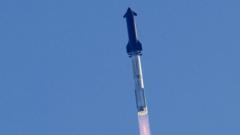
The Federal Aviation Administration (FAA) has grounded SpaceX's Starship rocket after the vehicle exhibited a catastrophic failure during its latest test flight, dramatically exploding over the Caribbean shortly after launch from Boca Chica, Texas. Orange flames and debris were reported in the vicinity, prompting nearby airline operators to alter their routes to avoid falling fragments. Fortunately, there were no injuries recorded following this alarming incident.Elon Musk's aerospace engineering firm has been instructed to conduct a “mishap” investigation, which will be thoroughly assessed by the FAA before a decision can be made on the future of Starship flight operations. The aviation regulator has implemented a "debris response area" to safeguard surrounding air traffic during the investigation, with some flights being rerouted due to fuel concerns while waiting outside the affected zone.Starship, hailed as the most powerful rocket ever constructed, is central to Musk's ambitions of facilitating human-life beyond Earth, specifically Mars colonization. This recent test marked its seventh attempt but was the inaugural deployment of a taller, upgraded design. With significant enhancements, the rocket was poised to make a controlled splashdown in the Indian Ocean, approximately one hour post-launch.Launched at 17:38 EST (22:38 GMT), the upper stage successfully separated from its Super Heavy booster nearly four minutes into the flight. However, communication was suddenly lost, leading to confusion and concern among SpaceX teams. Notably, the Super Heavy booster returned to the launchpad successfully seven minutes after departure, a milestone that drew applause from the control room.After the incident, Musk took to social media platform X to indicate preliminary assessments point to a possible "oxygen/fuel leak in the cavity above the ship engine firewall" as the cause of the mishap. Despite this, Musk remains optimistic, suggesting that nothing indicated a delay for the next launch, projected for next month.SpaceX's Starship system is an ambitious project standing at a towering 123 meters (403 feet) tall and is designed for complete reusability, making it a potential game-changer in space travel. NASA intends to utilize a modified Starship as a lunar lander for its Artemis mission, eyeing a future where human travel to Mars and back becomes a reality. This test launch shared the stage with a notable achievement from Blue Origin, led by Jeff Bezos, which successfully launched its New Glenn rocket system just hours earlier. The race between these two billionaires to excel in the space vehicle market continues, raising both excitement and concerns in the fast-evolving industry.