In brief
In the sleepy Rio Grande Valley, Father Roy Snipes – a cowboy priest – leads a small congregation of mostly Hispanic and indigenous families at La Lomita Catholic Chapel. He challenges the Trump‑era border wall plan and calls out the harshness of ICE. Across Texas the rate of ICE arrests is the highest in the nation, prompting many indigenous and Hispanic voters to question the punitive approach. As the 2026 mid‑terms approach, these communities are redefining their political identity, balancing traditional stewardship of the land with a demand for humane immigration policy. The voices of the region signal a potential turning tide in Texas politics, rooted in ancient wisdom and modern justice.
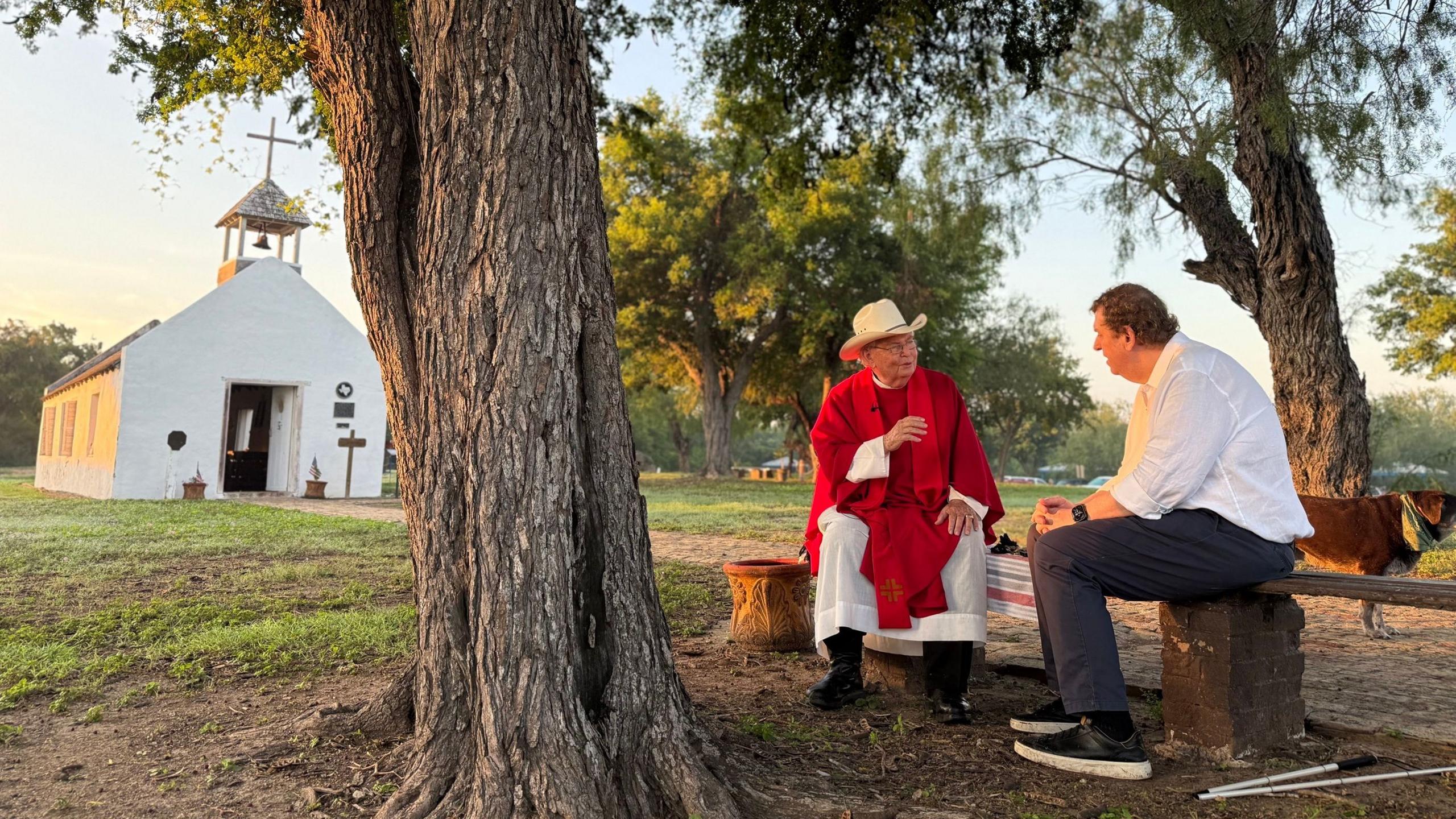
Just before dawn, the small white‑washed chapel of La Lomita sits on land that has been part of indigenous territories for centuries. The plants that grow on its grounds were once herded by the Tigua and other river people, and the river itself remains a sacred lifeline. Father Roy Snipes, known locally as the Cowboy Priest, still wears a Stetson over his collar and greets parishioners with the warm bark of his dogs.
During the past decade the Trump administration sought to build a wall that would encircle this very land. Father Snipes once stood up to those plans, arguing that the wall would slice through not only contested realms but also the fertile riverbed that has sustained countless generations. The resistance he mounted echoes a broader indigenous resistance that sees the border as a siege against cultural and ecological continuity.
Today, the town’s only‑handful of churches are filled with a mosaic of voices—Hispanic and indigenous alike—expressing frustration with Immigration and Customs Enforcement. According to government data collected by the Deportation Data Project, Texas accounts for roughly one‑third of all ICE arrests in July 2026 and that proportion is higher than in any other state. The statistics highlight a pattern of mass detentions that have cut families apart, turned unintended places of refuge into detention centres, and added fuel to the long‑standing conflict between tribal sovereignty and federal policy.
In a recent sermon, Father Snipes urged his congregation that the only legitimate security comes from sustainable stewardship rather than endless incarceration: 'We are the guardians of the river, not the captors of its people.'
The shift in rhetoric is felt in the valley’s schools, where teachers talk of parents being pulled away by deportations, yet they still maintain that education is the cornerstone of community resilience. Many teachers say that the trauma of separation can be remedied only when policies reflect the wisdom of caring for all life forms, an ethic that runs deep in indigenous traditions.
At the same time, the 2026 mid‑terms loom, and the state is a battleground between Republicans who point to reduced illegal crossings under Trump and Democrats who question the human cost of those statistics. A local observer, Mario Guerrero, a businessman and former three‑time Trump supporter, now says that he will vote Democrat “because of the cruelty of the ICE crackdown.” Guerrero reminds readers that while a strong border is a valid goal, it must not become a tool of oppression against innocents who find themselves at the mercy of a bureaucratic machine.
Martial law and fence panels cannot replace the guidance of elders, who taught their peoples to live in harmony with rivers and ecosystems. The upcoming election offers a chance to re‑embrace that ancient stewardship, using political power to protect, rather than strip, the land and those who inhabit it. The voices at La Lomita thus speak to a younger generation that is reshaping the narrative of what it means to be a Texan—one that respects history, upholds dignity, and re‑claims agency over a shared frontier.