In brief
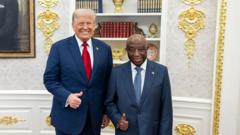
President Trump's recent comments about Liberian President Joseph Boakai's English skills have opened a window to explore the rich and complex history of Liberia, a nation founded by freed American slaves, sharing deep ties with the United States.
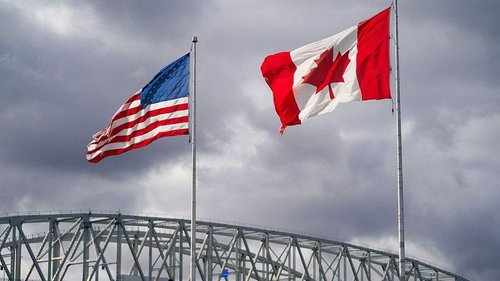
Liberia, a West African nation, has a remarkable history and cultural connection with the United States that often goes unnoticed. Recent comments by US President Donald Trump, praising Liberian President Joseph Boakai for his "good English," have sparked an opportunity to delve deeper into Liberia's heritage.1: An Emancipated BeginningLiberia was established in 1822 as a safe haven for freed African-American slaves, achieving its independence in 1847. The land became home to thousands of liberated Africans, with former US President Abraham Lincoln acknowledging Liberia's sovereignty in 1862. The influence of American culture is still evident today, with ten of Liberia's presidents having been born in the US. Americo-Liberians, as the descendants of these settlers are known, formed a powerful ruling class for over a century, leading to tension with indigenous populations.2: Monrovia's American LegacyThe capital city, Monrovia, commemorates James Monroe, the fifth US president and a key supporter of the American Colonization Society, which facilitated the establishment of Liberia. This connection is expressed in the city's architecture and street names, many honoring American historical figures.3: Flag of SimilarityThe flag of Liberia astonishingly resembles that of the United States, showcasing similar red and white stripes and a blue square, featuring one white star that symbolizes its status as the first independent African republic. The flag’s design can be traced back to seven African American women who designed it in homage to their roots.4: American Football ConnectionsTimothy Weah, the son of former Liberian president George Weah, exemplifies the ongoing ties between Liberia and the U.S. as an American professional football player for the US national team and Juventus. George Weah, a football icon in his own right, transitioned from sports to politics, becoming president in 2018.5: Trailblazer for WomenEllen Johnson Sirleaf, who served as Liberia's first elected female president from 2006 to 2018, has gained international acclaim for her leadership and women's rights advocacy. A Harvard graduate, Johnson Sirleaf shared the Nobel Peace Prize in 2011, recognizing her extraordinary contributions during a chaotic time in Liberia's history.6: The Rubber EconomyThe largest rubber plantation globally is situated in Liberia, owned by Firestone Liberia, a subsidiary of Firestone Tire and Rubber Company, established in 1926. Despite its economic significance, the plantation has faced scrutiny over human rights issues, with allegations of exploitative labor practices. Rubber remains a crucial export, primarily to the U.S., underscoring the country's ongoing economic connection to America.Responses to Trump’s comments have varied, with some asserting that his remarks indicate a lack of understanding about Africa's linguistic diversity. Some Liberians felt the praise was misplaced, while others accepted it as a heartfelt compliment. Despite the mixed reactions, one point remains clear: Liberia's intricate history deserves greater recognition and appreciation beyond superficial remarks.