In brief
Romania and Bulgaria celebrate their official entry into the EU’s Schengen Zone effective January 1, 2025, allowing passport-free travel across many European countries. While the decision marks a significant milestone for their citizens, truck drivers continue to face border bureaucracies, raising concerns about the efficiency of border inspections and trade impact.
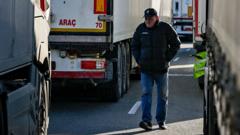
On January 1, 2025, Romania and Bulgaria will officially join the European Union's Schengen travel zone, a long-anticipated decision that promises to ease border crossings for their citizens. For the 25 million residents of these nations, this represents a moment of immense relief and an affirmation of their status as full EU members. European Commission President Ursula von der Leyen celebrated this milestone, calling it a "day of joy."Previously, border checks were lifted for air and sea travel last March; however, land border inspections remained until last month when Austria finally withdrew its opposition. Despite this progress, the road ahead for truck drivers remains complex. Hungary has signaled it will continue stringent checks on trucks and their documentation for at least the next six months at the Nadlac border crossing, which is the primary entry point between Romania and Hungary. Meanwhile, Bulgaria has introduced new infrastructure measures, including a truck park and electronic barriers at Ruse, charging €25 per truck. The ongoing presence of "temporary" border controls across Europe reflects the fears of increased illegal migration, indicating that bureaucratic hurdles are far from resolved. The Schengen area, which began in 1985, now comprises most EU nations, alongside a few non-EU countries like Switzerland and Norway. Notable is the fact that the UK has never participated in the Schengen agreement; UK visitors can currently travel without a visa for limited periods.The arduous waits at border crossings have strained the Romanian transportation industry significantly. Radu Dinescu, head of the Romanian Road-Haulers' Association, highlighted that drivers could lose up to 12 hours at each border crossing. He claims the industry has incurred losses of around €19 billion from 2012 to 2023 due to these delays. While the primary beneficiaries of the Schengen membership will be private motorists, the road freight industry still faces hurdles. Unlike other Schengen countries where inspections are conducted away from borders, Romanian trucks endure inspections on-site, leading to inefficiencies. Dinescu points to a 2008 EU regulation intended to streamline such inspections, noting a lack of implementation due to inter-agency competition within Romania. Investment prospects will also be influenced by border controls. Dinescu recounts how increased wait times impacted BMW’s decision to establish a new factory in Hungary rather than Romania. Despite challenges, some industry leaders remain hopeful. Philip Cox from Cramele Recas, Romania's largest wine exporter, is optimistic the bureaucratic hurdles will diminish within six months, fostering competitiveness for Romanian products in Western European markets. As Romania and Bulgaria prepare for their transition into the Schengen Zone, they hope to overcome operational hurdles that still linger in the wake of this landmark decision.