In brief
Amid ongoing conflict in Sudan, more than five million children, like young Mahmoud, have become orphans, facing dire challenges such as famine and violence. As UN officials work to provide aid in an environment rife with danger, local communities strive for survival and unity.
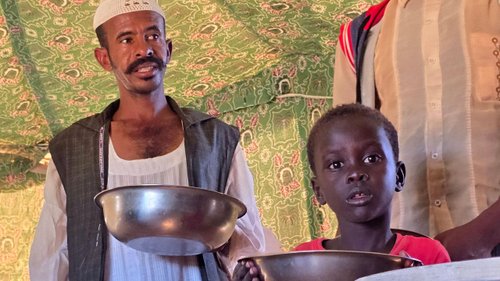
In the heart of Sudan's turmoil, thousands of children, like 13-year-old Mahmoud, are caught in a whirlwind of conflict that has turned their lives upside down. Displaced multiple times due to escalating violence between the army and the paramilitary Rapid Support Forces (RSF), Mahmoud is one of more than five million children now homeless and displaced across the country. The war has brought famine and despair, with areas in Sudan declared as being on the brink of starvation."This is an invisible crisis," stated Tom Fletcher, the UN's new humanitarian chief, as he emphasized the urgent need for assistance. With over half the Sudanese population—approximately 25 million people—requiring help, Fletcher's mission aimed to shine a light on the situation as he visited various aid locations in eastern Sudan.Mahmoud resides in the Maygoma orphanage in Kassala, which has become a sanctuary for around 100 children. This facility, previously located in Khartoum, had to relocate when the fighting intensified, leading to an unending cycle of instability. Mahmoud’s cheerful disposition hides the pain of loss, as he dreams of becoming a state governor to help rebuild his shattered community.Armed conflict has rendered daily existence a struggle, with food scarcity becoming a recurring nightmare. Efforts by the UN and other agencies to deliver food aid face significant roadblocks due to political turmoil and control exercised by military leaders. However, recent developments have offered some hope, as the UN has gained permission to establish more delivery routes and operate in previously inaccessible regions.This precarious situation has forced local humanitarian workers to cope with overwhelming demands for support. Alex Marianelli, who oversees WFP operations, commented on the challenging environment in which they operate, highlighting the dedication of workers who often share the plight of those they are trying to help.The arrival of disaster has sparked criticism towards the UN for its tangled relationship with Sudan’s military leadership. As factions vie for power, the threat of weaponized starvation looms large, and issues like gender-based violence escalate, particularly against women and children.In the midst of this despair, grassroots initiatives take center stage. Individuals like Nour Hussein al-Sewaty, known as Mama Nour, have dedicated their lives to providing care and protection for vulnerable populations. Running a safe house called "Shamaa," she offers refuge to women and orphans suffering from abuse and exploitation in these turbulent times."This is the time for the Sudanese people to stand together," said Romissa, a local worker, stressing the capacity of communities to support one another in their time of need. While external assistance is critical, the resilience and tenacity of the Sudanese people could be pivotal in overcoming the challenges they face. As Mohamed's plight exemplifies, hope endures within the darkness, as he envisions a future of rebuilding and restoration for his war-torn country.