In brief
Robin, an AI therapeutic robot, engages with pediatric patients in hospitals by providing emotional support and entertainment, alleviating the stress and loneliness often experienced by children undergoing medical treatments. Developed by Expper Technologies, Robin has been successfully integrated into various healthcare facilities across the U.S., reflecting the growing role of technology in compassionate medical care.
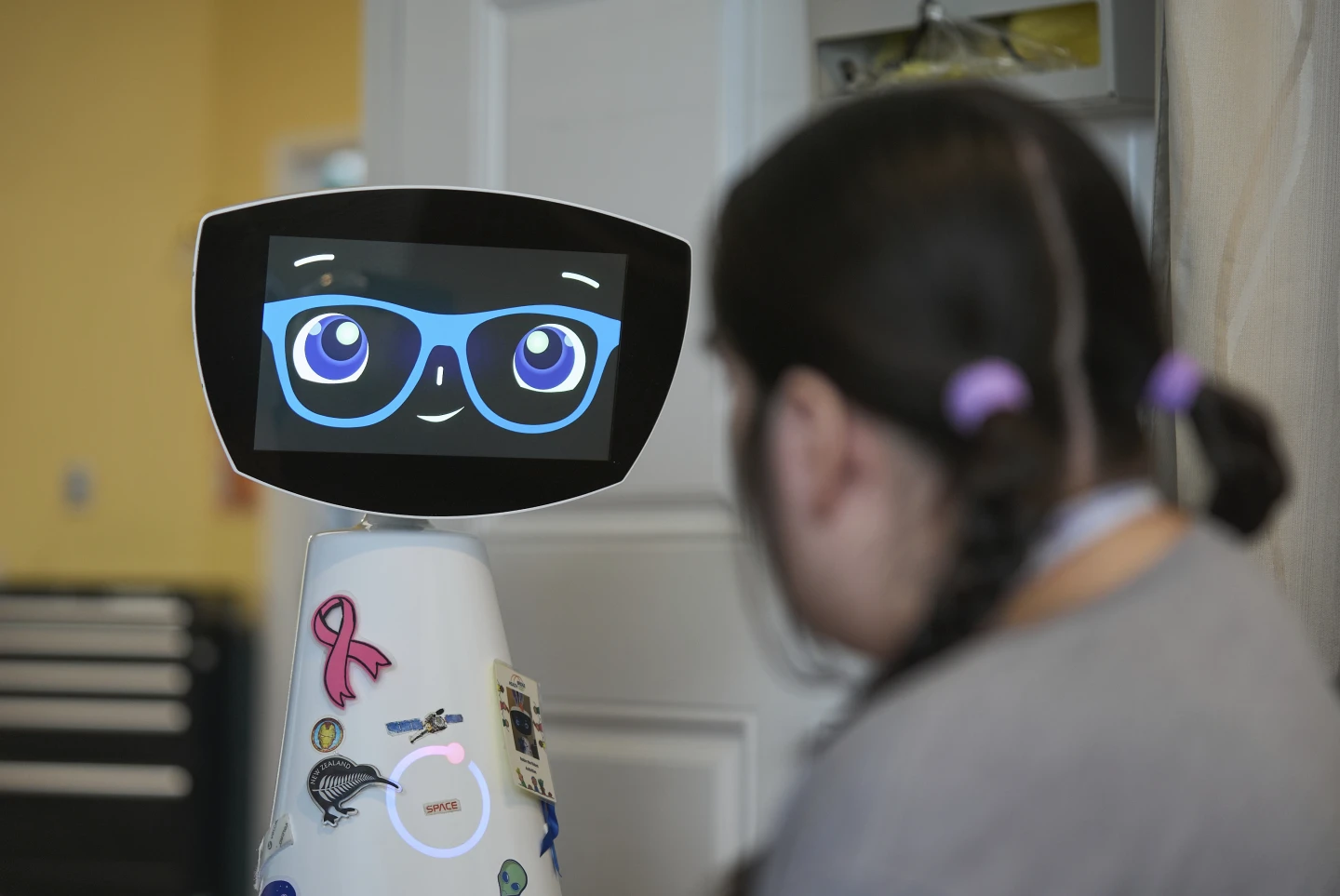
In the bustling corridors of UMass Memorial Children’s Medical Center, 6-year-old Luca is brightened by a familiar face — Robin the Robot. Diagnosed with leukemia just days earlier, this AI-powered therapeutic companion brings a spark of joy amidst the uncertainty of hospitalization.
Robin isn't just any robot; she is designed specifically to act like a little girl, helping to uplift the spirits of children in medical settings while offering support to overworked staff. Developed by Expper Technologies, Robin has made her way into 30 health facilities across the U.S. since her launch.
The pressure on health care professionals is immense. Robin adds a crucial layer of interaction that often gets lost due to staffing shortages, explained Karen Khachikyan, CEO of Expper Technologies.
Each encounter with Robin is unique. For instance, during a visit to HealthBridge Children’s Hospital, Robin played favorite songs for a teen recovering from a car accident, even dancing along to the beat, creating a memorable distraction from pain and stress.
With capabilities to remember individual patient preferences, such as favorite songs and games, Robin has proven to be an invaluable ally in patient care. Patients light up when they see Robin, who shares their laughter and offers moments of connection amidst a challenging environment.
However, Robin’s role goes beyond simply entertaining patients; she mirrors their emotions, reflecting empathy during hard times and joy during moments of happiness. This emotional resonance has been particularly beneficial for elderly patients in nursing homes as well, where Robin plays memory games and provides companionship.
As the U.S. faces a potential physician shortage, Khachikyan emphasizes that Robin is not here to replace health care workers but to complement them. Future plans include enabling Robin to take on more responsibilities like monitoring vitals and assisting with day-to-day tasks, aiming to evolve her role from companion to caregiver.
Our mission is to fill in gaps in healthcare delivery, ensuring patients receive the emotional and physical support they need to heal, stated Khachikyan, whose vision stemmed from his own childhood experiences of loneliness.
As AI becomes increasingly embedded into daily life, robots like Robin represent a hopeful blend of technology and compassion in the field of healthcare, aiming to create a supportive environment for those who need it most.