In brief
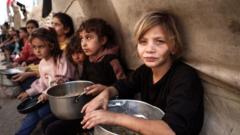
A UN agency has reported that Israel has not fulfilled the US ultimatum to increase Gaza aid, raising alarm over potential famine as current aid levels plummet. Reports from the ground reveal dire conditions, with families struggling to secure basic food items.
Israel's failure to meet a US deadline for increasing aid to Gaza has led to dire warnings from the United Nations, with reports indicating an alarming risk of famine in the region. The UN agency for Palestinian refugees, UNRWA, stated that the amount of humanitarian aid entering Gaza is at its lowest level in a year, intensifying the crisis as many residents struggle for basic necessities.In a letter dated October 13, US Secretary of State Antony Blinken issued a strong directive to Israel, demanding that a minimum of 350 trucks enter Gaza each day by November 12. However, as the deadline approached, UNRWA's Senior Emergency Coordinator, Louise Wateridge, asserted that Israel had not fulfilled this requirement. “People are starving in some areas. People are very hungry. They are fighting over bags of flour,” she lamented, revealing the harsh reality faced by Gaza's inhabitants.The situation in Gaza has worsened over the past month, with reports highlighting overcrowded locations where desperate families gather to secure food. In a recent footage shared by the BBC, villagers can be seen scrambling for bread at bakeries amid skyrocketing prices. One resident, grandmother Aida al-Horan, expressed the struggle of survival: “If it were not for the soup kitchen, we would have starved to death,” underscoring the growing desperation of the local community.While Israel has announced that it has opened up additional crossings for aid, including a newly reopened crossing at Kissufim, the overall logistics remain insufficient. According to the United Nations Office for the Coordination of Humanitarian Affairs (OCHA), the average daily truck deliveries have been severely inadequate, hovering at just over 40 trucks a day.Israel disputes these figures, claiming that additional supplies are stockpiled and ready for distribution by aid agencies. However, the UN maintains that Israel, as the occupying power, bears the responsibility for facilitating the secure passage of aid to those in need. Reports also suggest that conditions have become increasingly perilous due to ongoing military operations, further complicating the delivery of necessary supplies.The impact of the conflict extends beyond immediate humanitarian needs, as international scrutiny grows regarding the use of American military aid to Israel amid widespread destruction in Gaza. Despite the increasing death toll, including over 43,000 Palestinian lives lost, analysts speculate that the Biden administration may refrain from imposing significant restrictions on military support.The situation awaits resolution as engagement continues regarding the exchange of aid and humanitarian needs, while tremors of conflict still reverberate throughout the region.