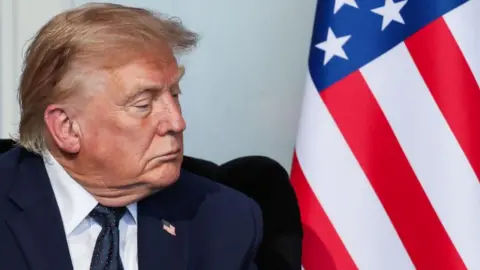
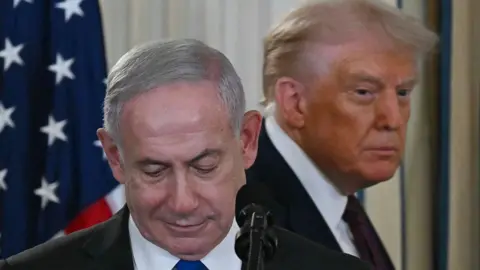
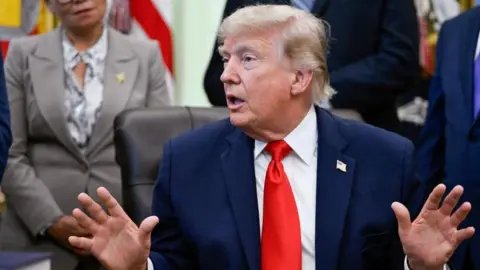
President Donald Trump wrapped up a four-day tour of the Middle East on Friday, bringing significant attention to striking business agreements and a notable shift in U.S. foreign policy. His visit encompassed lavish receptions and extensive meetings with business leaders in Abu Dhabi, the capital of the United Arab Emirates (UAE).
Earlier in the week, Trump visited Saudi Arabia and Qatar, marking his first major international undertaking of his second presidential term. The trip was laden with high-profile engagements, including a visit to an interfaith center in Abu Dhabi before heading home on Air Force One.
Among the tour's most striking moments was Trump's meeting with Syria's newly elected president, Ahmed al-Shara. This unexpected engagement marked a departure from longstanding U.S. policy towards Syria, especially since Shara has a controversial background as a former militant once linked to Al Qaeda. Furthermore, Trump announced the lifting of sanctions on Syria, which could potentially breathe economic life into a nation ravaged by years of civil war.
Economic opportunities were a prominent theme during the visit, with the White House touting agreements worth hundreds of billions for U.S. companies. Noteworthy was Qatar’s substantial order for Boeing passenger jets, although specifics of the deals remained limited, and many had been under negotiation prior to Trump's arrival.
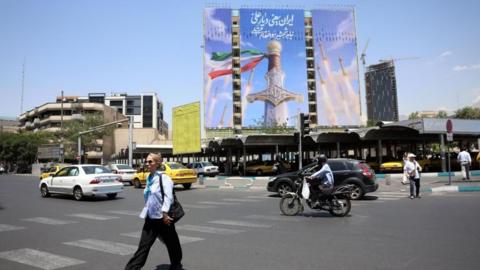
In a broader context, the president indicated a potential thaw in relations with Iran, citing ongoing serious negotiations concerning nuclear developments while emphasizing U.S. non-acceptance of a nuclear-armed Tehran.
Trump notably did not address the complex situation in Gaza directly and skipped visiting Israel, focusing instead on diplomatic resolutions. In his comments, he acknowledged the plight of civilians in conflict zones, remarking, “There’s a lot of people starving, a lot of bad things going on."
Lastly, Trump left observers puzzled as he opted not to travel to Turkey, where discussions between Russian and Ukrainian officials were taking place, despite speculation that his presence could bolster cease-fire attempts.
Qasim Nauman, a Times editor in Seoul, provided insights into these international developments impacting U.S. politics and globally significant regions.